

Many patients dealing with chronic spine issues reach a frustrating wall: despite undergoing surgery, trying various medications, or turning to physical therapies, the excruciating back pain or weakness in their legs remains unchanged. In a video address, Dr. Manish Yadav from Rai Shree Ayurveda Spine Clinic in Kanpur highlights why post-surgical or long-term spine pain fails to heal and what patients often overlook during their recovery journey.
1. The Anatomy: Why Nerves and Muscles Suffer
To understand why pain lingers, it helps to examine how the spine operates:
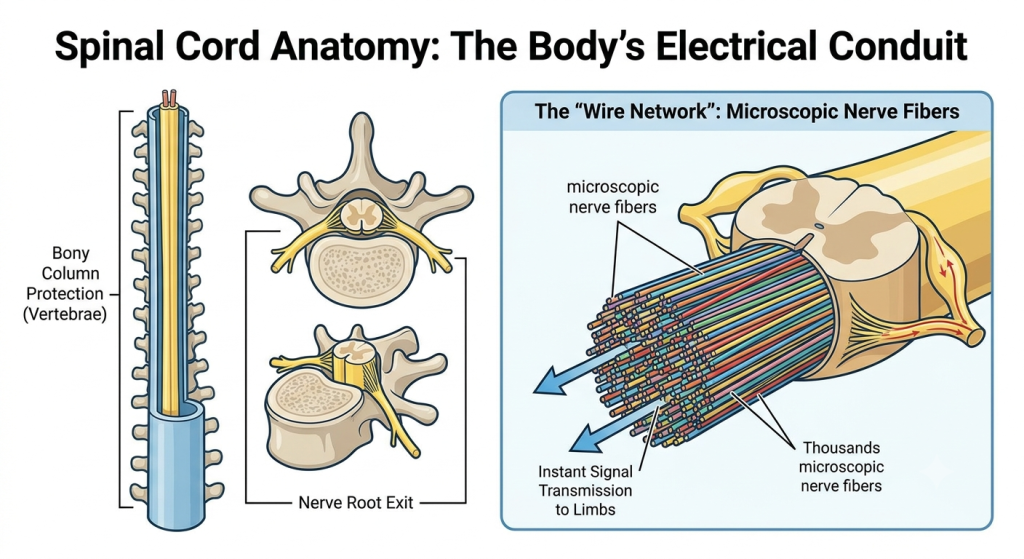
- The Wire Network: Dr. Yadav compares the spinal cord to an insulated electrical cable containing thousands of microscopic nerve fibers. These fibers transmit signals between the brain and limbs at lightning speeds.
- Bony Protection: The spinal cord passes through stacked vertebrae that act as a protective column.
- Discs and Daily Stress: Daily activities—such as lifting objects, household chores, or poor sitting posture—trigger continuous metabolic wear and tear. When tissue degeneration outpaces the body’s natural repair process, spinal discs weaken and compress nearby nerves.
2. Core Reasons Post-Surgical Pain and Weakness Persist
According to Dr. Yadav, surgery alone may clear structural blockages, but it does not automatically restore muscle strength or reverse nerve damage.
A. Muscle Weakness and Loss of Tone
Even after a successful procedure, patients often remain unable to stand or walk properly due to severe muscular atrophy and weak tone. Without targeted muscular rehabilitation, the spine lacks the structural support required to stay aligned.
B. Unmanaged Metabolic Factors (Diabetes, High BP, & Thyroid)
Systemic health conditions directly interfere with spinal tissue regeneration:
- Diabetes: Muscles require glucose and proper metabolic pathways to rebuild. In diabetic patients, poor nutrient absorption prevents muscle tissue recovery.
- High Blood Pressure & Medication Side Effects: Long-term use of specific anti-hypertensives or steroids can lead to muscle weakness and altered mineral retention.
- Thyroid Dysfunction: Thyroid imbalances further reduce metabolic efficiency and muscle tone.
C. Fragmentation of Medical Care
Many patients visit separate doctors for back pain, diabetes, and blood pressure simultaneously without coordinating their treatments. When these treatments operate in isolation without addressing the root cause, recovery stalls.
Infographic Summary: Myths vs. Clinical Reality
| Factor | Common Patient Myth | Clinical Reality (Dr. Yadav’s Perspective) |
|---|---|---|
| Spine Surgery | “Surgery instantly solves all back and leg pain.” | Surgery resolves physical compression, but muscle rebuilding and nerve healing take dedicated care. |
| Pain Relief | “Taking pain medication and resting is enough.” | Unaddressed muscle atrophy and metabolic issues keep pain active. |
| Chronic Illness | “Diabetes/BP have no impact on spine recovery.” | High blood sugar and blood pressure impair tissue nutrition and delay muscle recovery. |
| Patient Awareness | “Doctors handle everything; I don’t need to ask questions.” | Over 70% of patients do not know the exact cause of their back pain because they don’t ask their doctors. |
Key Takeaway for Patients
Dr. Yadav emphasizes that around 70% of patients experiencing spine problems do not know the underlying cause of their symptoms simply because they haven’t asked. Patients are encouraged to engage actively with their healthcare providers, understand how conditions like diabetes or high blood pressure affect their spine, and focus on holistic muscular recovery alongside surgical or medical interventions.
Watch the video: