

In the fast-paced modern world, our health often takes a backseat, but understanding the intricate systems of our body is crucial. One such vital system is our nervous system. In a recent discussion, Dr. Manish Yadav shed light on why nerves can become problematic, the symptoms that arise, and how to maintain overall well-being.
What Happens to Our Nerves?
To simplify how our nerves function, think of an electrical wire. Inside, there is a conductive material (copper wire), and on the outside, there is a protective insulation layer (plastic). Similarly, our nerves have an internal structure protected by a sheath called the myelin sheath. When this sheath or the internal structure is compromised due to underlying health issues like high sugar levels, chronic conditions, or deficiencies, it leads to various diseases or malfunctions.
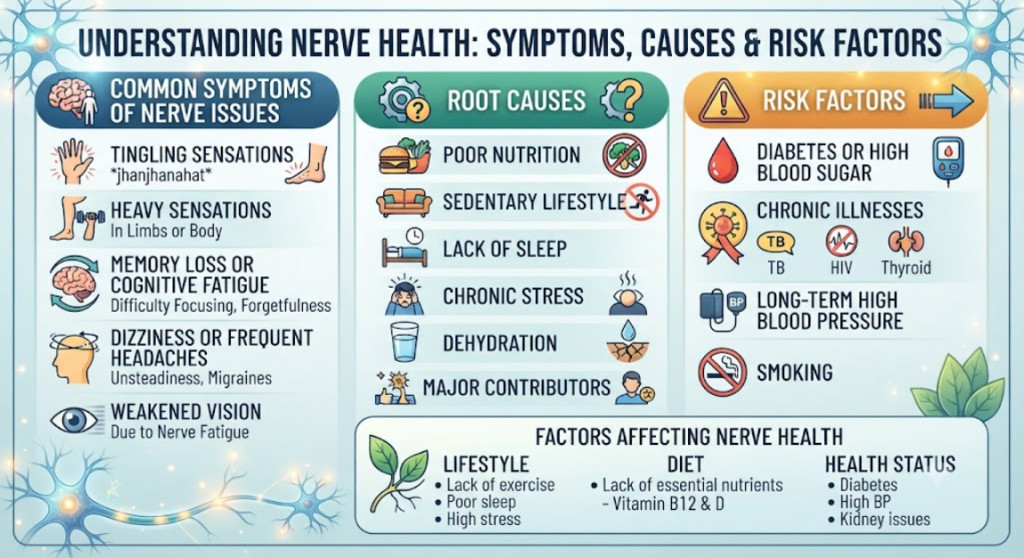
Common Symptoms of Nerve Issues
When the health of our nerves is affected, the body sends signals. Some of the most frequently observed symptoms include:
- Tingling sensations (often described as jhanjhanahat).
- Heavy sensations in limbs or the body.
- Memory loss or cognitive fatigue.
- Dizziness or frequent headaches.
- Weakened vision due to nerve fatigue.
Root Causes and Risk Factors
Many factors can exacerbate these conditions. Dr. Yadav emphasizes that poor nutrition, sedentary lifestyles, lack of sleep, chronic stress, and dehydration are major contributors. Furthermore, certain groups are at higher risk:
- Individuals with diabetes or high blood sugar.
- People suffering from chronic illnesses like TB, HIV, or thyroid issues.
- Those with long-term high blood pressure.
- Individuals who engage in smoking.
Factors Affecting Nerve Health
- Lifestyle: Lack of exercise, poor sleep, high stress.
- Diet: Lack of essential nutrients (Vitamin B12 & D).
- Health Status: Diabetes, High BP, Kidney issues.
Pathways to Healing
The good news is that many nerve-related diseases can be managed through proactive lifestyle adjustments and proper nutrition.
- Nutritional Support: Incorporate foods rich in Vitamin B and E, such as almonds, peanuts, mustard seeds, milk, whole grains, legumes, and lean meats/fish.
- Essential Minerals & Vitamins: Ensure intake of calcium (paneer, milk, soy) and Vitamin C (citrus fruits like oranges, lemons, guava, and leafy greens).
- Diagnostic Steps: If you suspect issues, consult a specialist and consider tests like CBC, Vitamin B12/D levels, and kidney/liver function tests (KFT/LFT).

Conclusion
Dr. Yadav stresses the importance of seeking out specialized care—whether in modern medicine or Ayurveda—specifically from a neurologist or a practitioner specializing in nerve health. Understanding the signs early and adopting a nutrient-rich, active lifestyle can significantly protect the health of your nerves and help you avoid severe long-term diseases.
Watch the Video: