
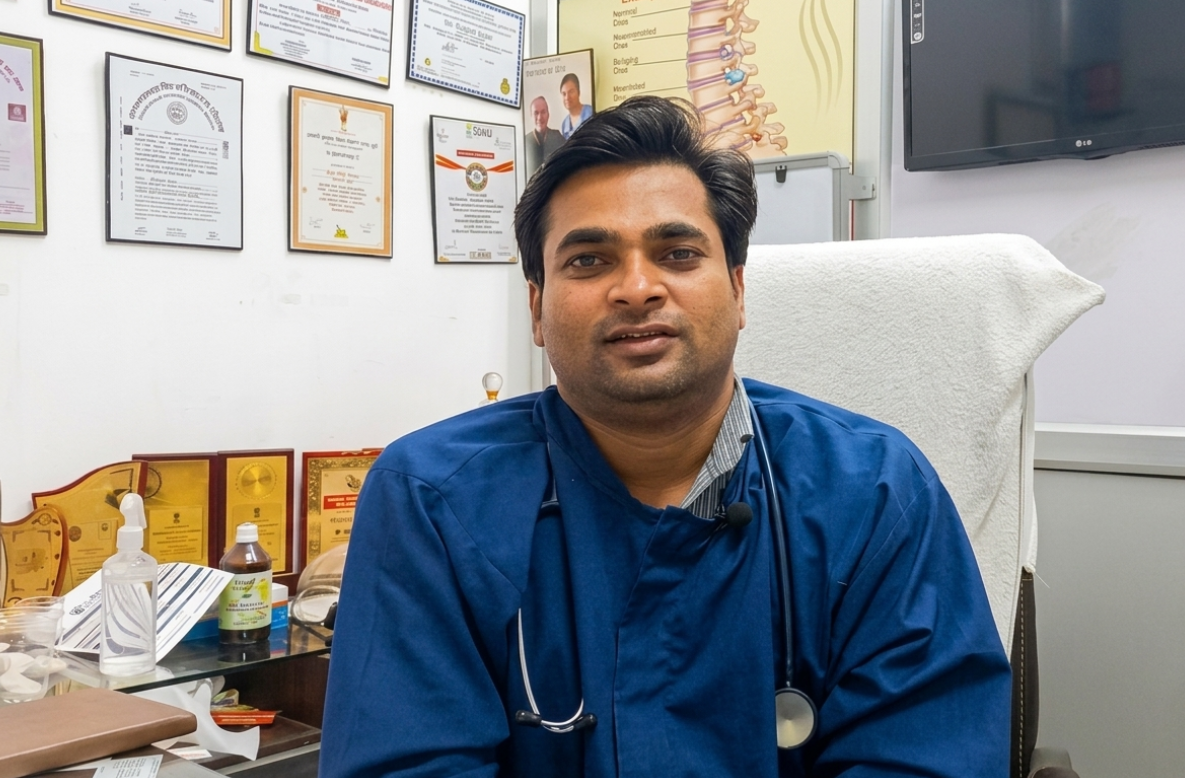
Living with persistent joint issues can feel like a never-ending cycle of popping temporary pain relievers without ever fixing the root of the problem. In an insightful educational video, renowned expert Dr. Manish Yadav addresses why so many individuals struggle with ongoing discomfort, outlining the real medical culprits behind joint degeneration and how ancient wisdom offers lasting relief.
Why Do Our Joints Cry Out? Understanding the Root Causes
According to Dr. Manish Yadav, a leading spine specialist based in Kanpur, Uttar Pradesh, many patients consume pain medications for years without realizing why their joints are deteriorating. When treating chronic pain, particularly in older demographics aged 50 to 65, identifying the exact type of underlying condition is critical.
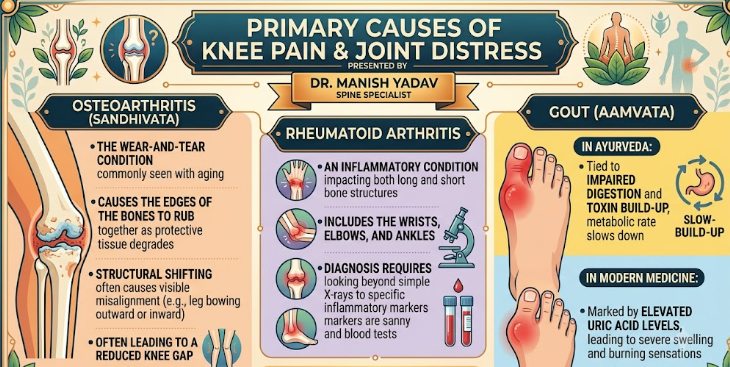
He breaks down the primary causes behind debilitating knee pain and general joint distress:
- Osteoarthritis (Sandhivata): This is the wear-and-tear condition commonly seen with aging. It causes the edges of the bones to rub together as protective tissue degrades. This structural shifting often causes visible misalignment, such as a leg bowing outward or inward, often leading to a reduced knee gap.
- Rheumatoid Arthritis: An inflammatory condition impacting both long and short bone structures—including the wrists, elbows, and ankles. Diagnosis requires looking beyond simple X-rays to specific inflammatory markers and blood tests.
- Gout (Aamvata): In Ayurveda, this is tied to impaired digestion and toxin build-up. When the metabolic rate slows down, undigested food creates impurities that settle into the joints. In modern medicine, this is marked by elevated uric acid levels, leading to severe swelling and burning sensations, typically targeting the big toe first.
Beyond the Bones: Hidden Medical Culprits
The video points out that joint pain isn’t always just a mechanical or skeletal failure. Dr. Manish Yadav highlights several distinct diagnostic indicators that require targeted medical intervention:
- Thyroid Imbalances: Some patients experience intense internal coldness, even during peak summer months like July. When joint distress is accompanied by extreme sensitivity to cold, a blood panel often reveals hypothyroidism, which must be addressed to find relief.
- Joint Tuberculosis (TB): If severe swelling, localized redness, fluid accumulation, or pus occurs in a single isolated joint (like one knee or shoulder) following a seemingly minor sprain, a standard joint issue should not be assumed. An ultrasound or a dedicated TB Gold test can confirm joint tuberculosis.
- Ankylosing Spondylitis: Characterized by severe morning stiffness throughout the body and a slight hunched posture in the spine. This genetic condition is heavily linked to the HLA-B27 marker.
The Ayurvedic Approach to Lasting Relief
When it comes to managing long-term joint health, Dr. Manish Yadav strongly advocates for traditional Ayurveda over a lifetime reliance on temporary painkillers. He stresses that standard painkillers only block brain signals; they never cure the root pathology and can damage the kidneys over time.
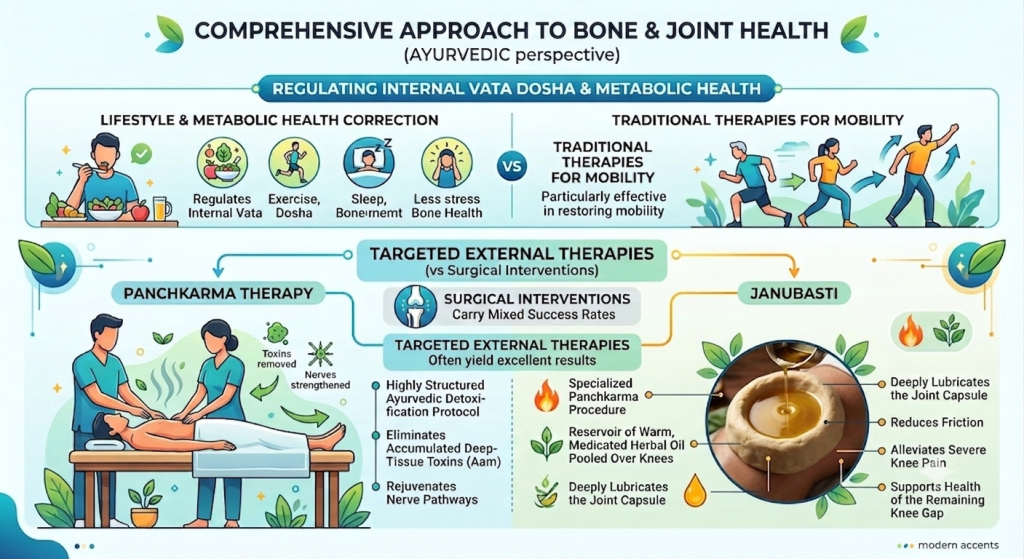
Instead, a holistic correction of one’s lifestyle and metabolic health can regulate the internal Vata dosha responsible for bone health.
Traditional therapies are particularly effective in restoring mobility. While surgical interventions like joint replacements carry mixed success rates, targeted external therapies often yield excellent results:
- Panchkarma Therapy: A highly structured Ayurvedic detoxification protocol that eliminates accumulated deep-tissue toxins (Aam) and rejuvenates nerve pathways.
- Janubasti: A specialized panchkarma procedure where a reservoir of warm, medicated herbal oil is pooled over the knees. This therapy deeply lubricates the joint capsule, reduces friction, alleviates severe knee pain, and supports the health of the remaining knee gap.
Ultimately, Ayurveda offers an incredibly safe and time-tested alternative to heavy pharmaceutical dependency, provided treatments are carried out under the direct supervision of a trained practitioner. Modifying digestive habits, boosting metabolism, and adopting natural therapies can help individuals break free from chronic discomfort and reclaim their mobility.
Watch the video:-