
In health and wellness discussions, debilitating pain can completely disrupt an individual’s lifestyle. One such severe condition causing intense discomfort is Avascular Necrosis (AVN). In a detailed educational overview, noted spine specialist and panchkarma specialist Dr. Manish Yadav from the Bone and Spine Clinic in Kanpur, Uttar Pradesh, sheds light on the AVN problem—popularly known as the deadening or decaying of the hip bone—and explores effective alternative ways to manage it.
What is the AVN Problem?
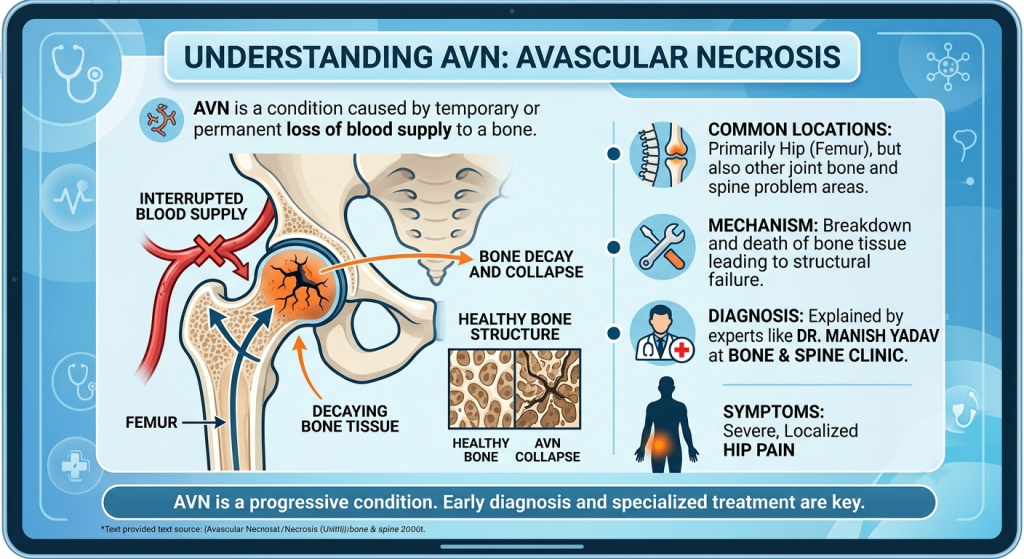
Avascular Necrosis, or AVN, is a condition that occurs when the blood supply to a specific section of a bone is temporarily or permanently cut off. Without proper blood circulation, the bone tissue begins to break down and die, eventually causing the bone to collapse.
While bone and spine problem issues can emerge across various joints, AVN most commonly targets the femur (thigh bone) at the hip joint. Dr. Manish Yadav explains that when the head of the femur loses its blood supply, it gradually begins to decay or “rot,” resulting in severe, localized hip pain.
Primary Triggers and Root Causes
The onset of severe chronic joint pain isn’t always isolated to general wear and tear. According to the expert, several crucial factors accelerate this condition:
- Excessive Steroid & Painkiller Intake: A major contributor to the AVN problem is the prolonged use of heavy steroids or over-the-counter pain medication. Individuals treating other illnesses with continuous steroid regimens often face diminished blood flow to their deep bone structures.
- Alcohol Consumption: High alcohol intake damages blood vessels, reducing the essential supply of nutrients and oxygen to the hip joint.
- Trauma or Injury: Physical accidents, dislocations, or hidden fractures can disturb nearby blood vessels, starving the bone tissue.
Recognizing the Symptoms
Ignoring persistent pain can lead to long-term mobility issues. The deterioration of the joint usually progresses through noticeable phases:
- Early Stage Discomfort: It initially manifests as minor but constant hip pain or occasional back pain that travels down the leg.
- Decreased Flexibility: As the bone decays, the normal gap within the socket shortens, restricting smooth leg movements.
- Gait Changes: Patients find it difficult to bear weight on the affected leg, eventually developing a distinct limp (claudication).
In conventional Allopathic medicine, initial screenings like X-rays might miss early-stage cellular decay, making an MRI vital for an accurate diagnosis. Conventional routes often treat advanced stages with complex surgical procedures, culminating in total hip replacement.
Comprehensive Management: Beyond Surgery
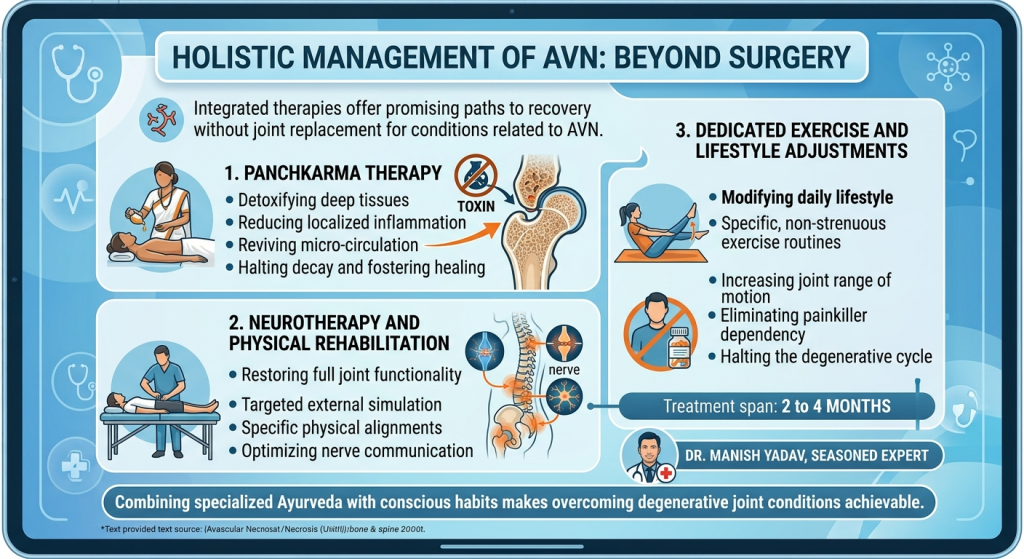
Fortunately, surgical intervention isn’t the absolute final choice for everyone suffering from conditions related to avn. Integrated therapies focusing on natural rejuvenation offer promising paths toward recovery without replacing the joint.
1. Panchkarma Therapy
As a seasoned expert, Dr. Manish Yadav strongly emphasizes the therapeutic power of ancient Ayurveda. Tailored panchkarma therapy focuses on detoxifying the deep tissues, reducing localized inflammation, and reviving the micro-circulation surrounding the decaying femoral head. This specialized care helps arrest further decay and fosters an environment for the bone to heal naturally.
2. Neurotherapy and Physical Rehabilitation
Restoring full joint functionality requires targeted external simulation. Neurotherapy and specific physical alignments are introduced to stimulate localized nerve endings and optimize biological communication around the hip and spine.
3. Dedicated Exercise and Lifestyle Adjustments
Recovery is highly dependent on modifying one’s daily lifestyle. Patients are guided through specific, non-strenuous exercise routines designed entirely to increase the joint’s range of motion without adding damaging stress. Simultaneously, eliminating dependency on random self-prescribed pain killers prevents internal bone hollowings, halting the degenerative cycle over a treatment span of two to four months.
Ultimately, addressing severe bone conditions demands early identification and a shift away from short-term suppressants. By combining therapeutic interventions like specialized Ayurveda with conscious daily habits, overcoming the hurdles of degenerative joint conditions becomes an achievable reality.
Watch the video:–