
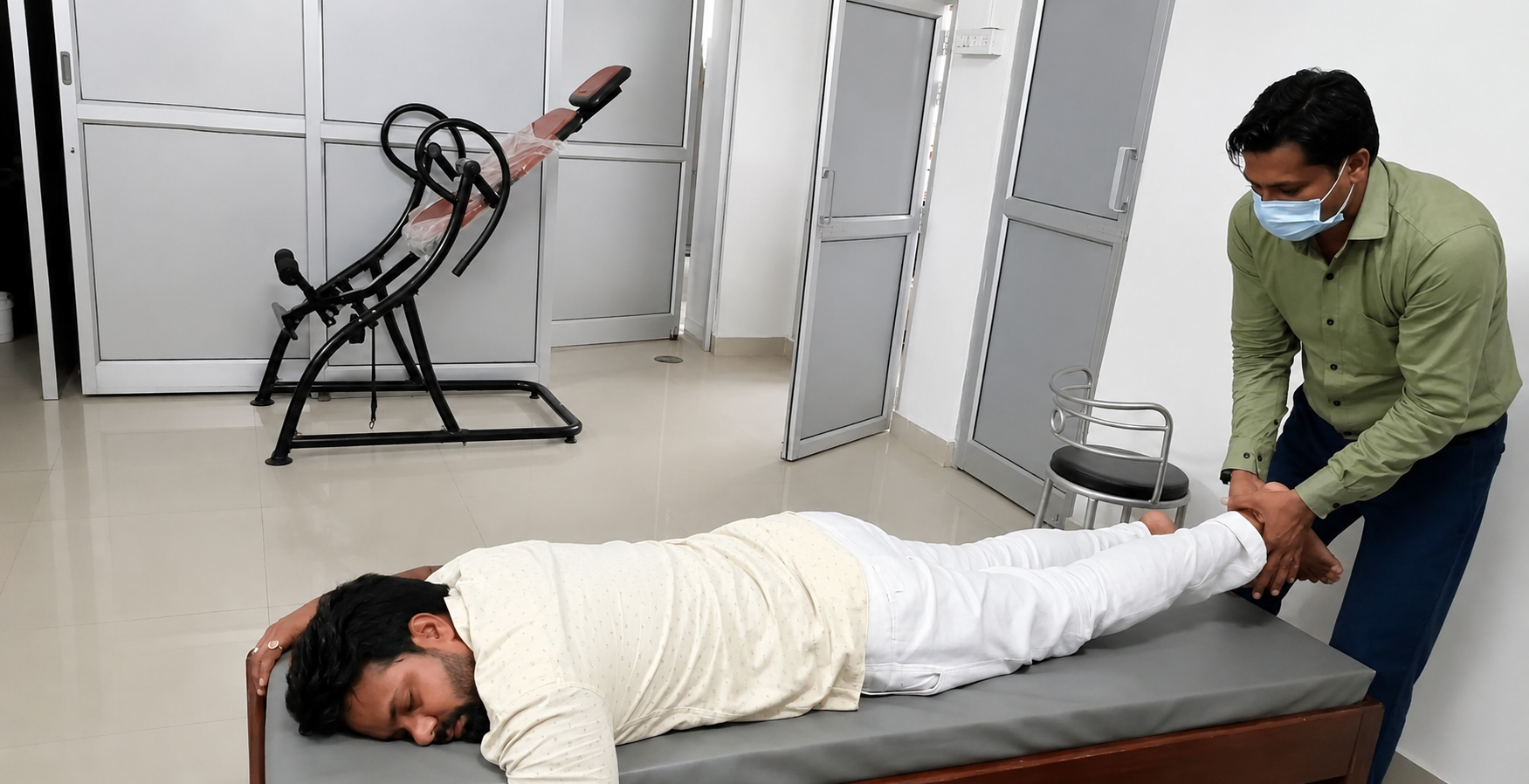
Spinal health plays a central role in overall well-being, influencing everything from daily mobility to posture and nerve function. In a clinical demonstration by Dr. Manish Yadav, patients undergoing spinal alignment receive systematic hands-on therapy designed to alleviate stiffness, relieve pain, and correct postural imbalances.
Here is an overview of what a typical spinal alignment session looks like, how the therapy is performed, and key safety measures to keep in mind.
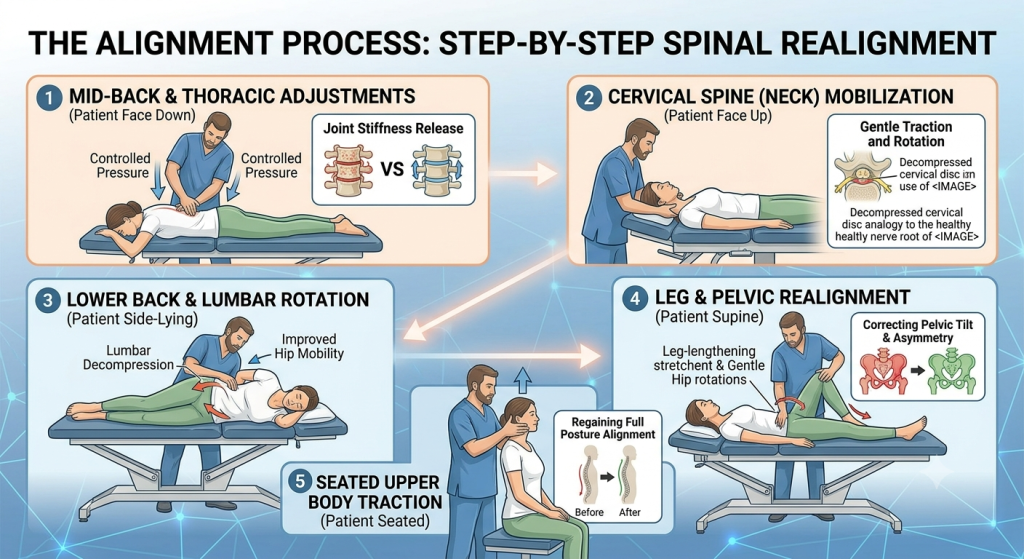
The Alignment Process: Step-by-Step
During a treatment session, a practitioner guides the patient through various positions to systematically target different segments of the spine and surrounding muscle groups:
- Mid-Back & Thoracic Adjustments: The patient lies face down on a specialized treatment table. The practitioner applies targeted, controlled pressure along the mid-back (thoracic spine) to relieve tension and release joint stiffness.
- Cervical Spine (Neck) Mobilization: With the patient lying comfortably on their back, gentle manual traction and controlled rotational movements are applied to the cervical vertebrae to restore neck mobility and reduce neck tension.
- Lower Back & Lumbar Rotation: The patient is placed on their side with one leg bent. The practitioner executes a precise side-lying spinal twist to decompress the lumbar spine and improve mobility in the lower back and hips.
- Leg & Pelvic Realignment: Leg-lengthening stretches and gentle hip rotations are performed to address pelvic tilt and structural asymmetry, ensuring balance throughout the lower body.
- Seated Upper Body Traction: The session often concludes with seated stretches and neck mobilization, helping the patient regain full posture alignment while supporting normal spinal curvature.
Guide to Spine Alignment & Care
An educational overview highlighting spine anatomy, common causes of spinal misalignment, and beneficial post-treatment practices:
Key Benefits of Professional Spine Alignment
- Pain Relief: Helps ease localized discomfort in the neck, mid-back, and lower back regions.
- Improved Mobility: Restores natural range of motion across stiff joints and spinal segments.
- Posture Correction: Assists in correcting forward head posture, rounded shoulders, and pelvic imbalances.
- Nerve Decompression: Reduces pressure on spinal nerves caused by muscle tightness or disc displacement.
Important Safety Tips
- Consult a Healthcare Professional: Always undergo spinal manual therapy from a qualified practitioner or licensed professional.
- Communicate Discomfort: Inform the therapist immediately if you feel sharp or unnatural pain during any manipulation.
- Post-Session Care: Stay hydrated, maintain good sitting posture, and avoid heavy lifting immediately after an alignment session.
Watch the video: