
When dealing with severe spinal conditions like a slip disc or lumbar spine displacement, patients are frequently told that surgery is their only remaining option. However, traditional systems of medicine like Ayurveda offer effective, non-invasive pathways to relief and functional recovery.
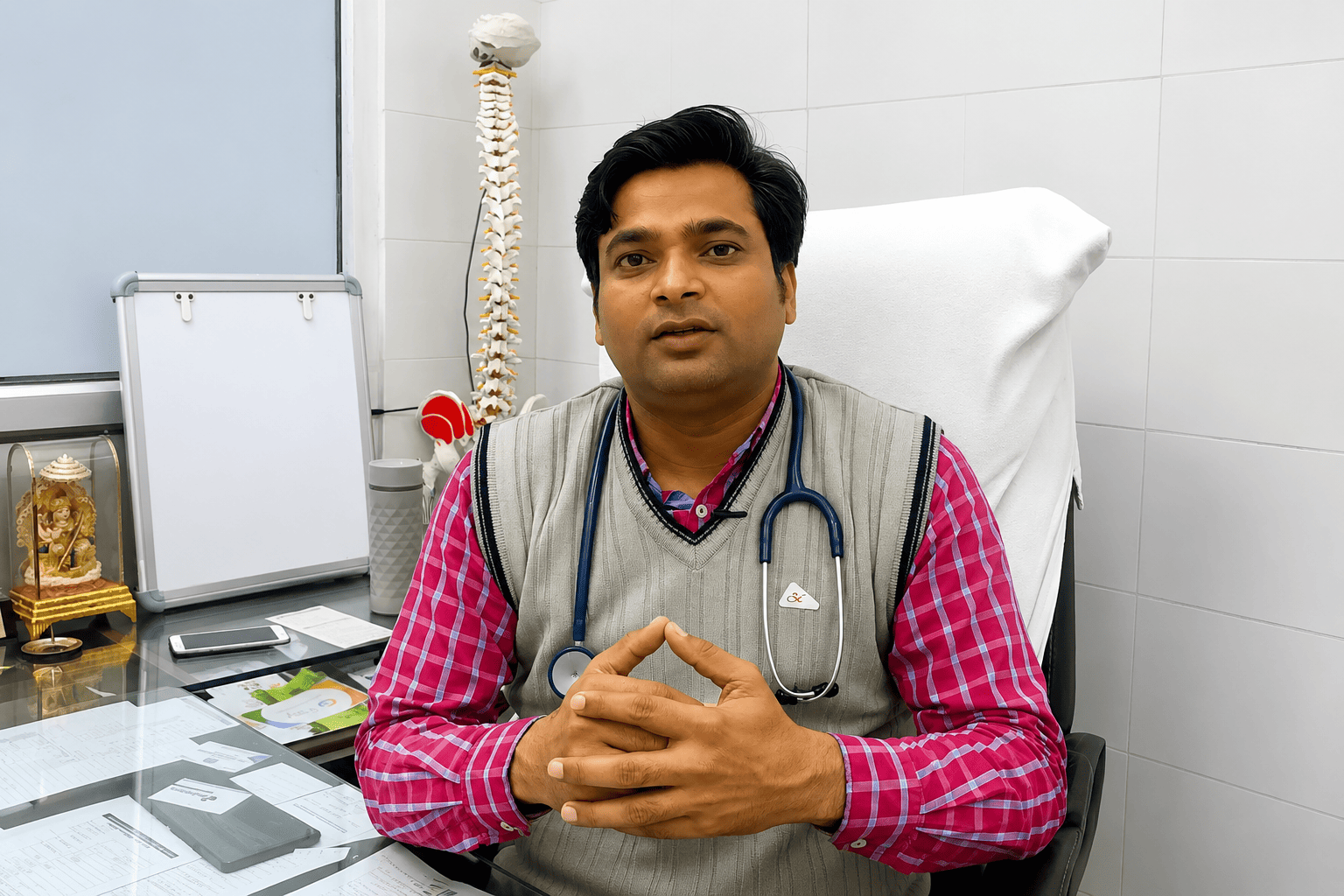
In a clinical case study shared by Dr. Manish Yadav, an elderly patient who was advised to undergo surgery for severe spinal disc issues achieved remarkable recovery through targeted Ayurvedic care.
Case Background and Severe Symptoms
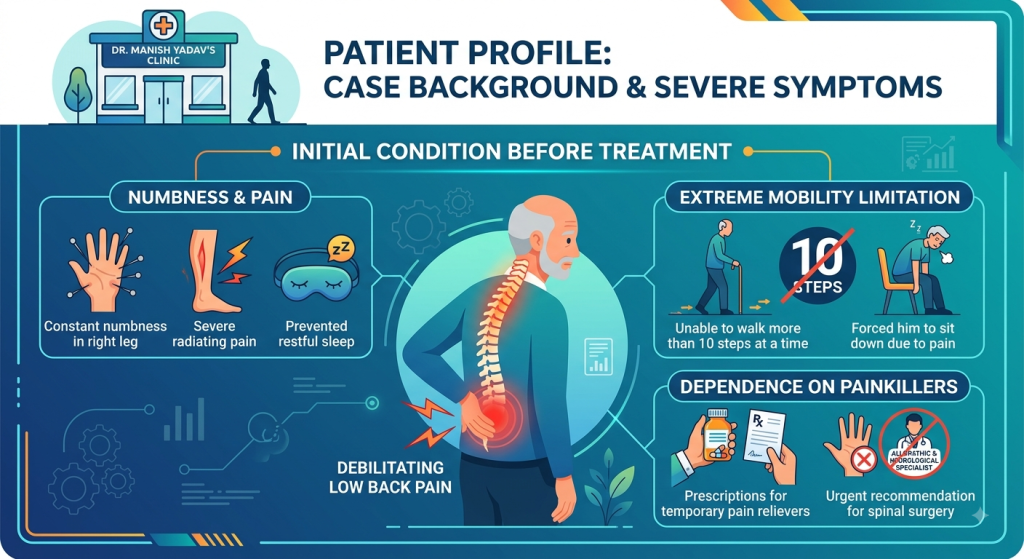
Before seeking treatment at Dr. Manish Yadav’s clinic, the patient suffered from debilitating low back pain that radiated down his right leg. His condition had deteriorated to a point where simple daily functions became nearly impossible:
- Numbness & Pain: Constant numbness in the right leg and severe radiating pain that prevented restful sleep.
- Extreme Mobility Limitation: The patient was unable to walk more than 10 steps at a time without experiencing severe pain that forced him to sit down.
- Dependence on Painkillers: Prior consultations with allopathic and neurological specialists resulted in prescriptions for temporary pain relievers and an urgent recommendation for spinal surgery.
MRI Diagnostic Findings
An MRI scan performed on the patient revealed multiple structural spinal issues:
- L4–L5 & L5–S1 Anterolisthesis: Forward displacement of the vertebrae.
- Disc Bulges & Desiccation: Posterior central disc bulge causing nerve compression.
- Cervical Spine Involvement: Loss of natural cervical lordosis (kyphosis).
In conventional medicine, multi-level disc herniation accompanied by listhesis typically leads directly to surgical intervention to decompress the spinal nerve roots.
The Ayurvedic Treatment Approach
Dr. Manish Yadav outlined a holistic non-surgical management protocol. While specialized Panchakarma therapies (such as Kati Basti and targeted neuro-therapies) are ideal for disc degeneration cases, the patient primarily managed his recovery through oral Ayurvedic formulations due to time constraints.
The treatment regimen included classical Ayurvedic herbs and mineral formulations tailored for neurological and muscular health:
- Ekangveer Ras (for nerve rejuvenation and movement restoration)
- Panchamrut Lauha Guggulu (for bone strength and anti-inflammatory action)
- Rasraj Ras (for soothing neurological weakness and nerve compression)
Patient Results and Clinical Outcomes
The patient experienced significant improvement shortly after beginning the medication:
- Rapid Initial Relief: Within just one week of starting the prescribed Ayurvedic treatment, the patient experienced initial symptomatic relief.
- Restored Mobility: Over time, the intense leg pain and numbness subsided, allowing the patient to walk comfortably without frequent stops.
- Improved Quality of Life: Sleep patterns normalized as nighttime leg pain dissipated, eliminating the reliance on daily synthetic painkillers.
Dr. Manish Yadav emphasized that while clinical symptom relief can be achieved up to 70%–80% without invasive procedures, long-term spinal stability requires proper posture, lifestyle care, and periodic therapeutic support.
Key Takeaways
- Surgery is Not Always the Only Choice: Non-surgical Ayurvedic treatments can manage nerve compression, inflammation, and pain associated with slip disc and anterolisthesis.
- Early Expert Guidance Matters: Selecting a qualified and experienced doctor ensures appropriate classical remedies rather than simple symptom suppression.
- Quality of Life Can Be Restored: Patients suffering from mobility restriction due to disc issues can regain their independence and daily comfort.
Watch the video: