
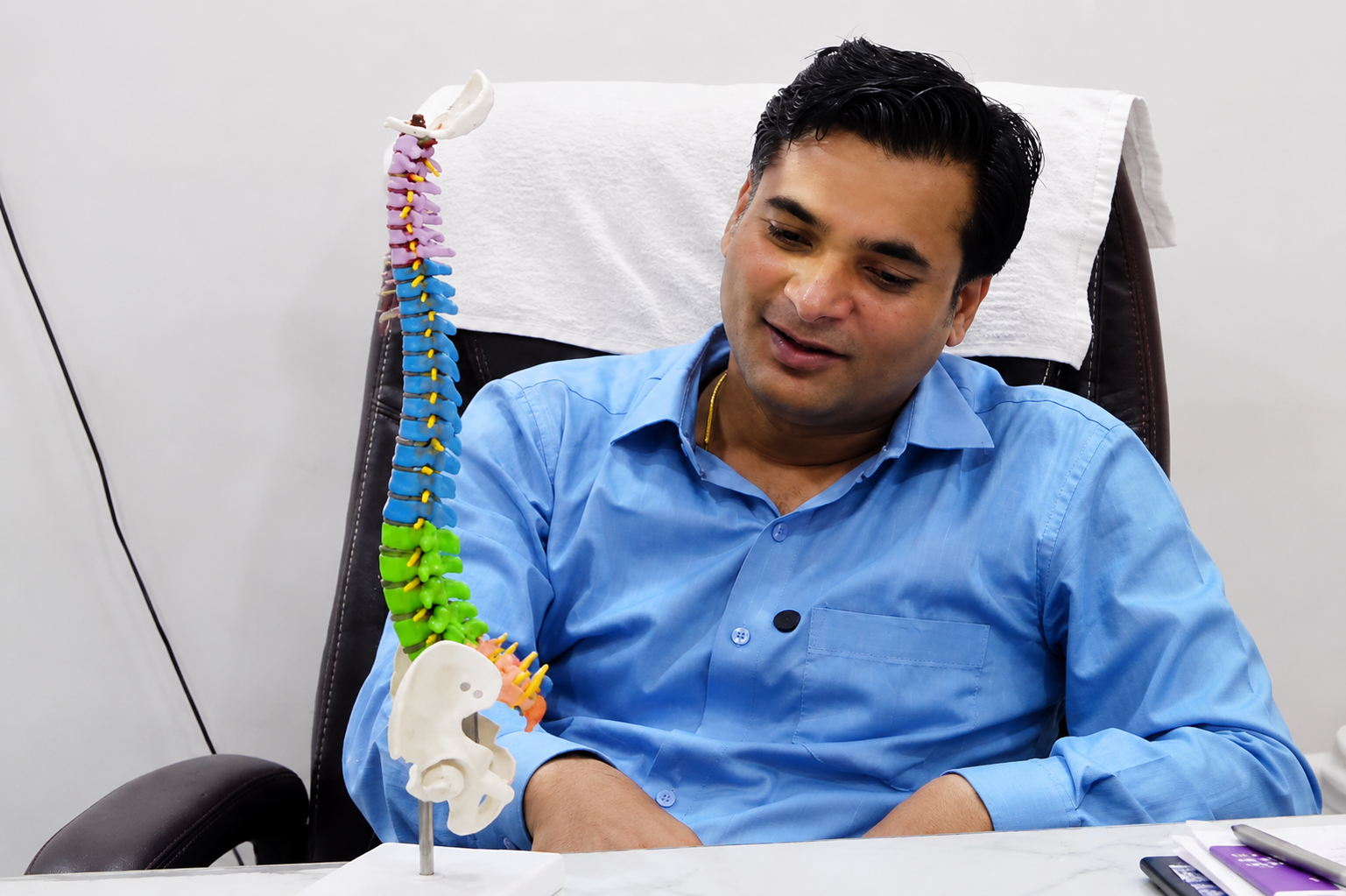
When faced with severe spinal issues like disc degeneration, nerve compression, or cervical spine pain, many patients wonder if surgery is the only definitive cure. However, spinal surgeries carry risks, limited repetition potential, and long-term recovery considerations.
In a recent short clinical clip shared by Dr. Manish Yadav, the doctor addresses a patient diagnosed with degenerative changes in the cervical spine, shedding light on why non-surgical alternatives like Panchakarma and Ayurvedic management should be considered early.
Key Highlights from the Clinical Session
- The Reality of Spine Surgeries
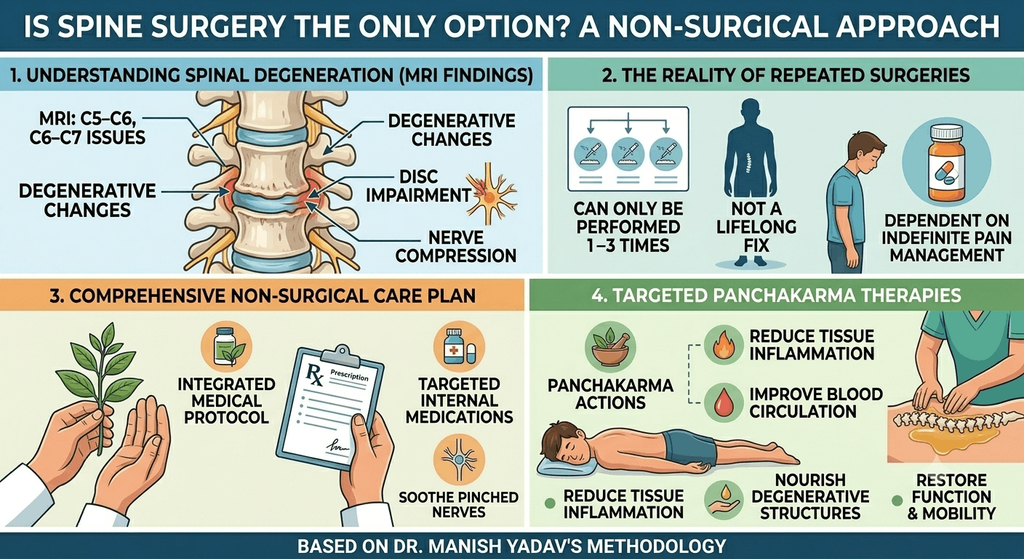
- As Dr. Manish Yadav notes, spinal surgery can typically only be performed one to three times at most. Repeated surgical interventions on the spinal column are not a sustainable lifelong fix and often leave patients dependent on pain management indefinitely if underlying issues persist.
- Hidden Spinal Degeneration (Cervical C5–C6 & C6–C7)
- During the consultation, the doctor reviews MRI findings revealing degenerative changes and disc issues at the C5–C6 and C6–C7 vertebrae.
- A common pattern observed in clinical settings is that structural degeneration develops over a long period without obvious early symptoms. Patients often only discover the extent of cervical spine degeneration after acute pain prompts an MRI scan.
- Combined Medical & Panchakarma Protocol
- Rather than rushing into surgical intervention, Dr. Yadav outlines a comprehensive non-surgical care plan.
- The recommended protocol integrates targeted internal medications along with specialized Panchakarma therapies designed to reduce localized tissue inflammation, soothe pinched nerves, and nourish degenerative spinal structures.
Why Consider Non-Surgical Ayurvedic Management?
- Preserves Natural Anatomy: Focuses on restoring function, mobility, and nerve health without structural alterations or invasive procedures.
- Targeted Tissue Regeneration: Panchakarma treatments help improve blood circulation and tissue lubrication around compromised discs and vertebrae.
- Long-Term Relief: Aims to address the root imbalance and mechanical strain on the spine, offering a sustainable alternative to repeated surgical operations.
Watch the video: