
Congenital physical and developmental conditions—such as cerebral palsy, developmental delays, and congenital neuromuscular stiffness—present unique challenges for pediatric rehabilitation. Children affected by these disorders often struggle with basic motor functions, joint flexibility, balance, and cognitive comprehension. While conventional treatments emphasize physical therapy or surgical releases, specialized Ayurvedic interventions and manual therapies are increasingly recognized for improving quality of life and functional independence.
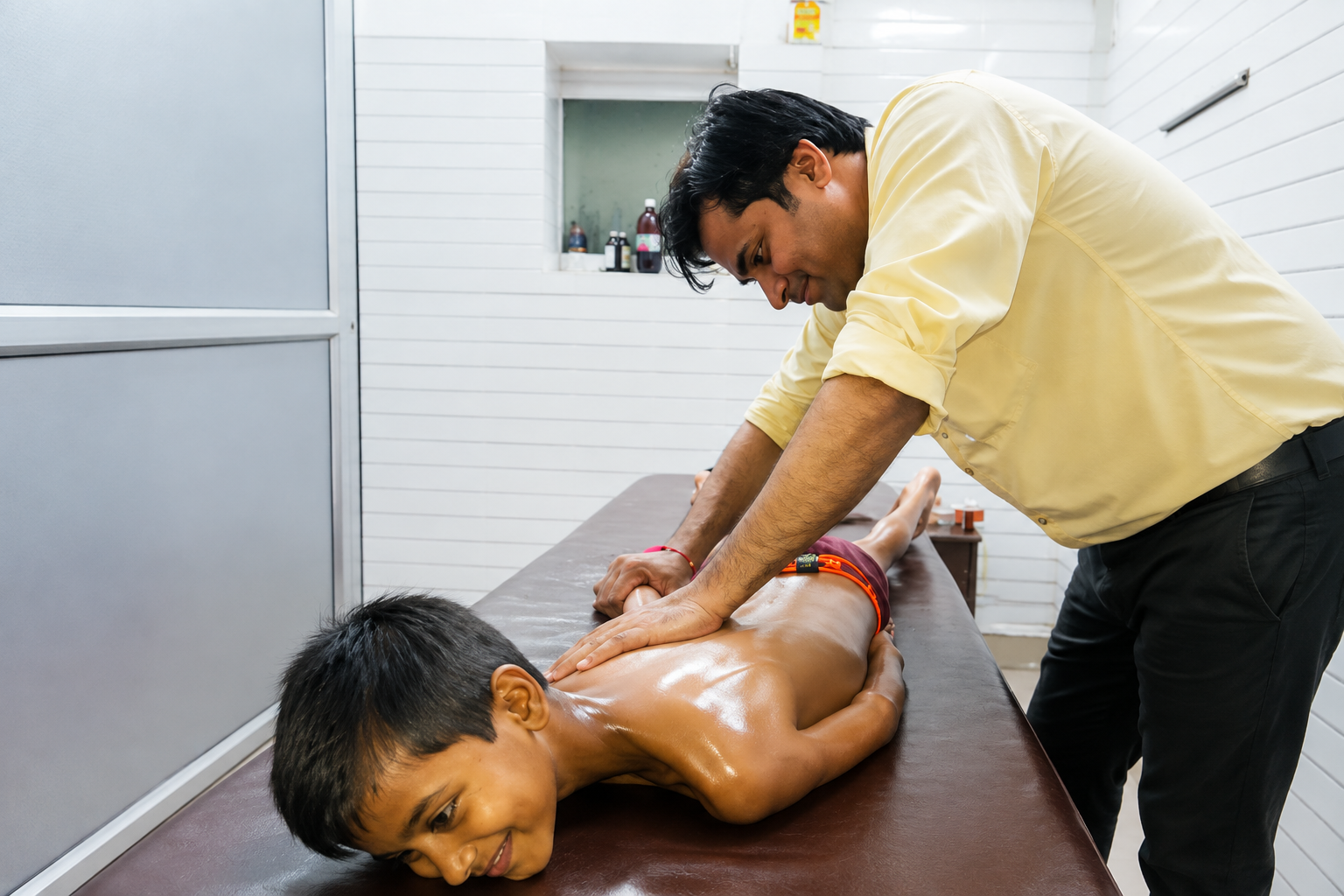
In a clinical video shared by Dr. Manish Yadav, the practitioner demonstrates a hands-on pediatric rehabilitation session designed to manage joint tightness, improve motor coordination, and support cognitive and physical development in a child with a congenital condition.
Understanding Congenital Neuromuscular Challenges
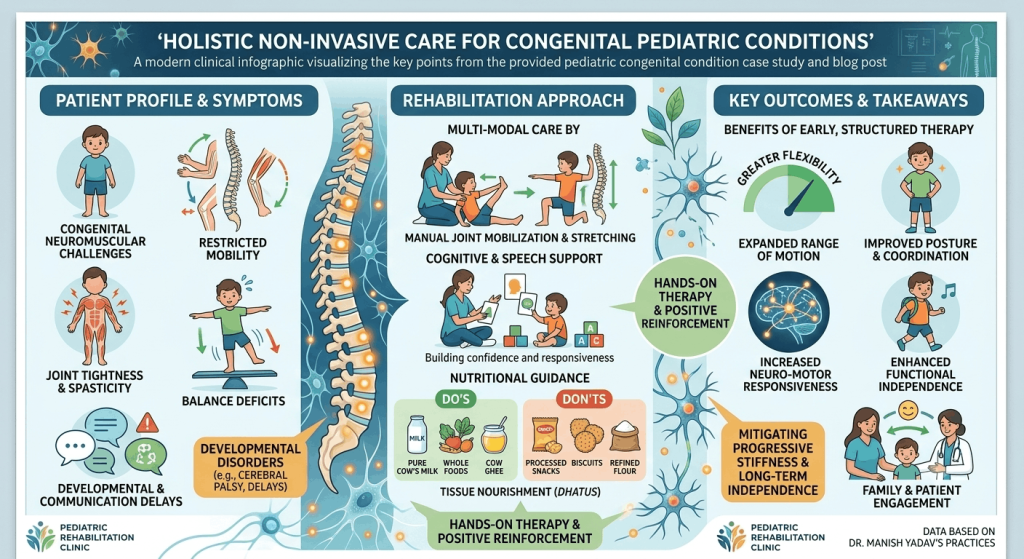
Congenital developmental disorders frequently impact both the central nervous system and the musculoskeletal system. Common presentation markers in young patients include:
- Restricted Joint Mobility & Spasticity: Muscle tightness (spasticity) in the arms, knees, and spinal column that prevents smooth extension and bending.
- Balance & Coordination Deficits: Inability to maintain steady posture, frequently leading to falls or difficulty standing independently.
- Cognitive & Communication Delays: Challenges in understanding verbal instructions or expressing responses clearly.
The Clinical Rehabilitation Approach
Dr. Manish Yadav’s approach blends gentle physical adjustments, therapeutic mobilization, and dietary guidance tailored for young patients:
1. Therapeutic Joint Mobilization & Stretching
During the session, specialized manual techniques are applied to stretch contracted limb muscles gently:
- Limb Mobilization: Targeted extension of the arms and knees to relieve muscle stiffness and expand range of motion.
- Spinal & Hip Alignment: Gentle alignment maneuvers applied along the spine and hips to improve overall posture and structural balance.
- Pain Management & Patience: Because stretching spastic muscles can cause mild discomfort, care is taken to perform procedures with patience, encouraging the young patient to build tolerance and resilience.
2. Cognitive Engagement & Speech Support
Rehabilitation extends beyond physical manipulation. Encouraging the child to follow simple physical commands, hold positions, and vocalize words aids in building confidence and enhancing neuro-motor responsiveness.
3. Nutritional Guidance
In addition to manual therapy, Dr. Yadav emphasizes proper nutrition to support muscle and bone growth:
- Dietary Adjustments: Recommending nutrient-dense whole foods while reducing processed snacks (such as biscuits and refined flour products).
- Dairy Considerations: Highlighting pure cow’s milk and traditional healthy fats to nourish tissues (Dhatus) and support overall physical development.
Key Takeaways
- Holistic Rehabilitation: Combining physical joint mobilization with cognitive stimulation and proper nutrition offers a comprehensive care model for children with congenital conditions.
- Early Intervention: Regular, structured therapy helps mitigate progressive joint stiffness and supports better long-term motor independence.
- Patient & Family Engagement: Encouraging positive reinforcement during therapy sessions builds a supportive environment vital for pediatric recovery.
Watch the video: