
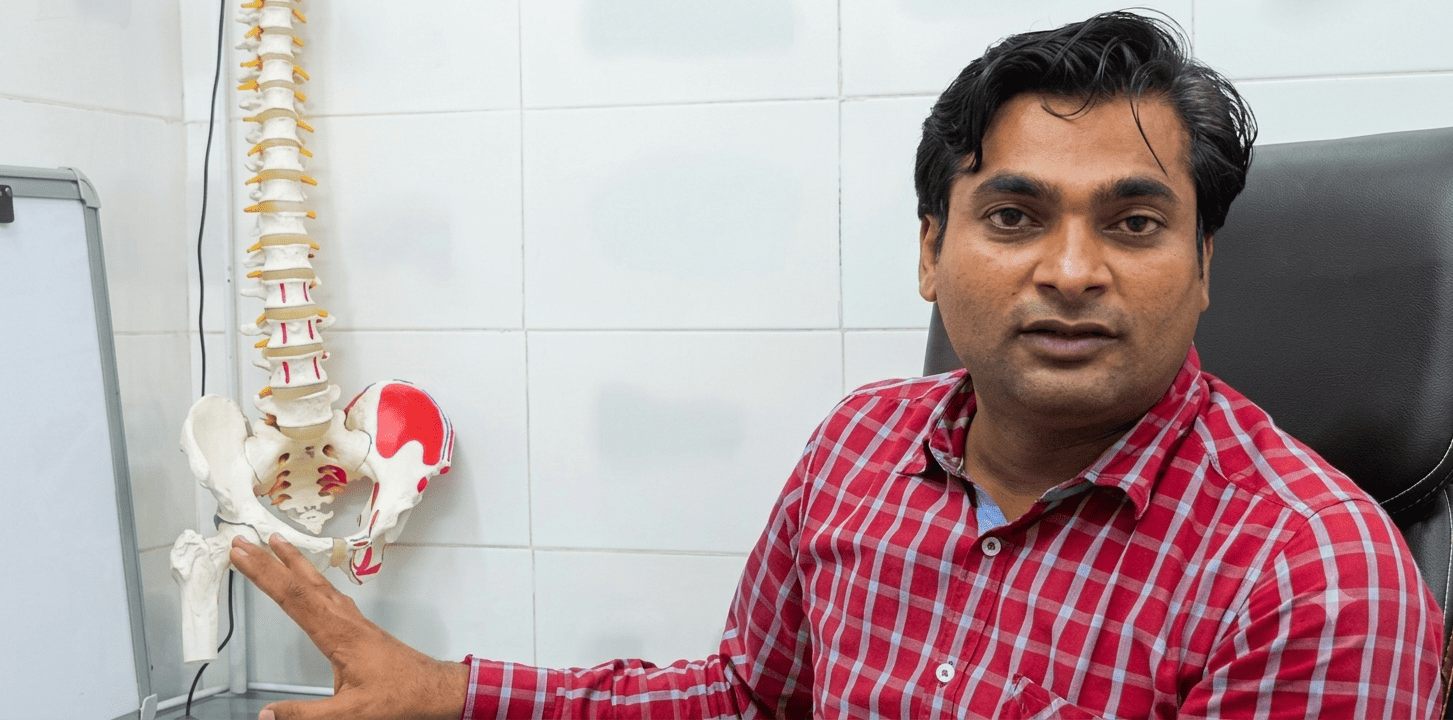
Avascular Necrosis (AVN) of the femoral head is a debilitating joint condition that causes chronic hip pain, stiffness, and restricted mobility. While core decompression surgeries, joint replacements, physical therapy, and Ayurvedic interventions are commonly explored, patients often experience temporary relief followed by recurring pain.
In a detailed clinical discussion, Dr. Manish Yadav breaks down why AVN occurs, the underlying factors that disrupt blood supply, and what patients must do to ensure long-term recovery.
What Causes Avascular Necrosis (AVN)?
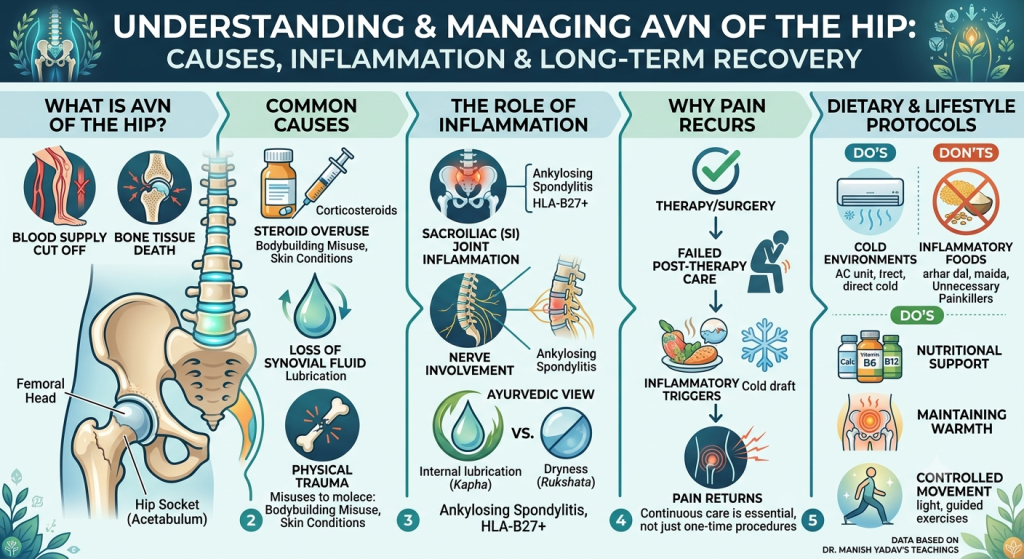
AVN occurs when the blood supply to the femoral head (the ball of the hip joint) becomes severely compromised, leading to bone tissue death and joint degeneration. Dr. Manish Yadav highlights several critical factors contributing to this reduced blood flow:
- Steroid Overuse: Excessive or unregulated use of corticosteroids—often prescribed for skin conditions, severe allergies, or misused for bodybuilding—weakens joint surfaces and increases susceptibility to osteonecrosis.
- Reduction of Synovial Fluid: Loss of natural lubrication within the hip socket (acetabulum) causes friction, cartilage damage, and early-stage hip arthritis.
- Physical Trauma: Direct injuries or fractures to the femoral head can disrupt delicate blood vessels surrounding the joint.
A major oversight in AVN management is failing to address local and systemic inflammation:
- Sacroiliac (SI) Joint Inflammation: Conditions such as HLA-B27 positivity, ankylosing spondylitis, or tuberculosis can cause severe inflammation in the SI joint, directly impairing hip joint lubrication and blood circulation.
- Nerve Interconnection: Inflammation around the lumbar and sacral spine impacts the sympathetic and parasympathetic nerves, worsening stiffness and discomfort in the pelvic region.
- Ayurvedic Perspective (Kapha & Dryness): From an Ayurvedic viewpoint, maintaining internal lubrication (Kapha) between joint surfaces is vital. Preventing internal dryness (Rukshata) protects the hip socket from progressive friction and collapse.
Why Pain Recurs After Treatment or Surgery
Patients frequently ask why symptoms return even after undergoing surgical procedures, physical exercises, or Panchakarma therapies.
Dr. Yadav explains that temporary therapies only offer brief relief if the patient fails to manage inflammatory triggers and lifestyle factors post-treatment. Long-term management requires continuous post-therapy care rather than relying solely on clinical procedures.
Recommended Dietary & Lifestyle Guidelines for AVN Patients
To support recovery and prevent disease progression, specific lifestyle and dietary precautions must be followed:
What to Avoid:
- Cold Environments: Avoid direct exposure to cold air or AC draft on the hip joint, as cold increases stiffness.
- Inflammatory Foods: Strictly avoid foods that induce gas or dryness, such as arhar dal (pigeon pea), refined flour (maida), and ice-cold water.
- Unnecessary Painkillers: Avoid continuous dependence on pain relievers, as they mask symptoms without curing joint damage.
Recommended Steps:
- Nutritional Support: Ensure adequate intake of Calcium, Vitamin B6, and Vitamin B12 under medical supervision.
- Maintaining Warmth: Keep the pelvic region comfortably warm to promote proper tissue circulation.
- Proper Posture & Controlled Movement: Perform light, clinician-guided exercises that preserve joint space without causing excessive friction.
Key Takeaways
- Identify the Root Cause: Eliminating triggers like steroid abuse and unmanaged inflammation is essential before expecting lasting recovery.
- Lubrication & Warmth: Protecting the hip joint from cold exposure and internal dryness helps preserve natural joint mobility.
- Patient Compliance: Long-term success in AVN treatment relies heavily on lifestyle discipline alongside clinical therapies.
Watch the video: