

Waking up with severe lower back stiffness, experiencing pain after standing for long periods, or feeling discomfort that spreads toward the hips, buttocks, or thighs is often mistaken for ordinary back pain. However, in some cases, the source of the pain may not be the spine itself but the Sacroiliac (SI) Joint. This condition is known as Sacroiliitis.
What is Sacroiliitis?
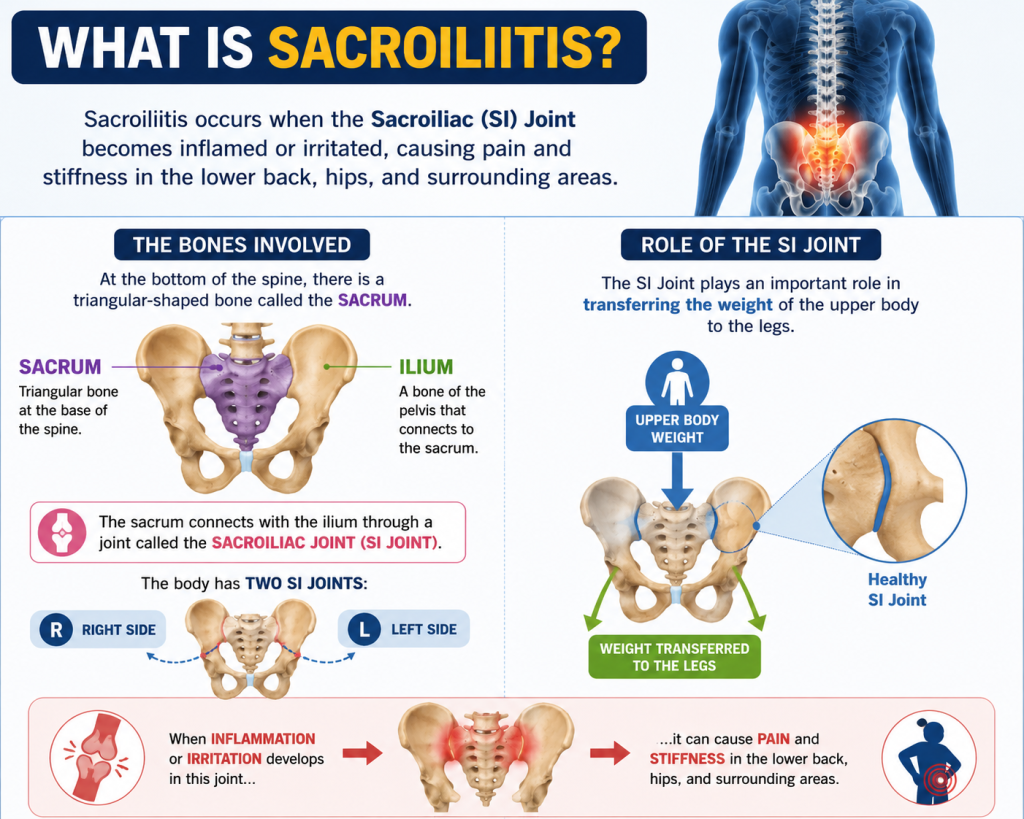
At the bottom of the spine, there is a triangular-shaped bone called the sacrum. It connects with the ilium, a bone of the pelvis, through a joint called the Sacroiliac Joint (SI Joint). The body has two SI joints—one on the right side and one on the left side.
The SI Joint plays an important role in transferring the weight of the upper body to the legs. When inflammation or irritation develops in this joint, it can cause pain and stiffness in the lower back, hips, and surrounding areas. This condition is known as Sacroiliitis.
Common Symptoms of Sacroiliitis
The pain is commonly felt around the lower back or belt-line area and may extend toward the hips or buttocks. In some cases, the discomfort can also travel toward the thighs.
One of the noticeable symptoms can be morning stiffness. After waking up, the lower back may feel extremely tight, stiff, or almost locked, with the stiffness lasting for some time before gradually improving with movement.
Pain may become more noticeable during certain activities, such as:
- Putting more weight on one leg
- Climbing stairs
- Changing sides while lying in bed
- Standing up after sitting for a long time
- Standing for extended periods
These symptoms can make everyday movements uncomfortable and may interfere with normal activities.
Possible Causes of SI Joint Inflammation
Sacroiliitis can develop due to different factors. Injury or trauma is one possible cause, particularly after a fall, road accident, or impact involving the lower back or pelvic region.
During pregnancy, changes and additional stress around the pelvis can also affect the SI joints and contribute to discomfort in some women.
Certain inflammatory conditions, including ankylosing spondylitis, can also affect the SI joints. In less common cases, infection may be another possible cause.
Why Understanding the Pain Matters
Not every case of lower back pain is Sacroiliitis. Similar symptoms can occur with several other conditions, which is why identifying the actual source of pain is important.
If lower back pain keeps returning, morning stiffness is persistent, or the pain begins spreading toward the hips, buttocks, or legs, a proper medical evaluation can help determine what may be causing the symptoms.
Understanding whether the SI Joint is involved can help in choosing the appropriate approach for managing the condition and improving day-to-day movement.