
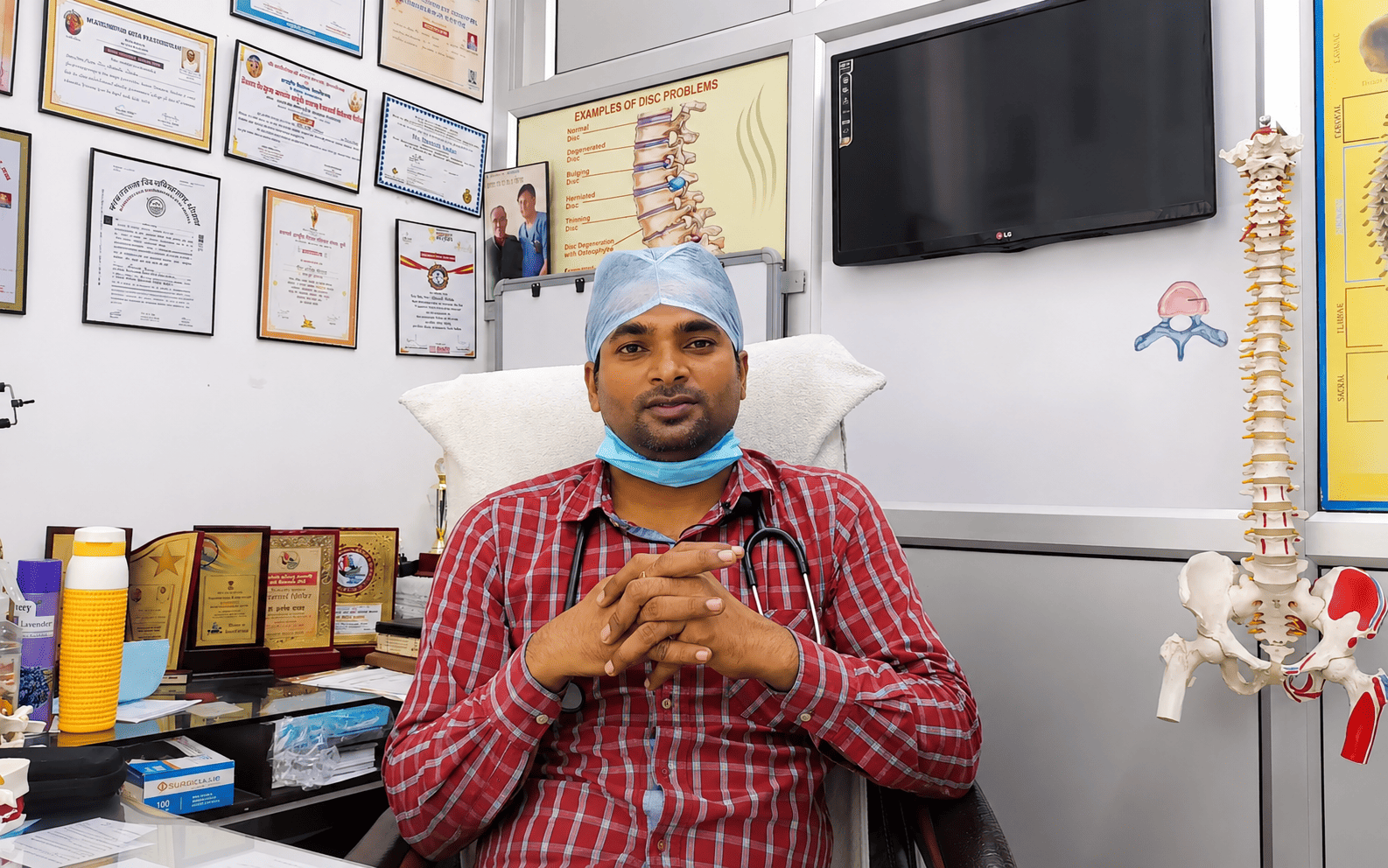
Lower back discomfort and spine issues affect millions globally, with nearly every second or third household experiencing lower back strain at some point. When heavy lifting or physical strain compresses intervertebral discs, a common backache can escalate into a condition known as a slipped disc or disc herniation.
In an informative video session, Dr. Manish Yadav breaks down the mechanical structure of intervertebral discs, explains how disc compression leads to nerve pain, and highlights non-surgical alternatives to herniated disc surgery.
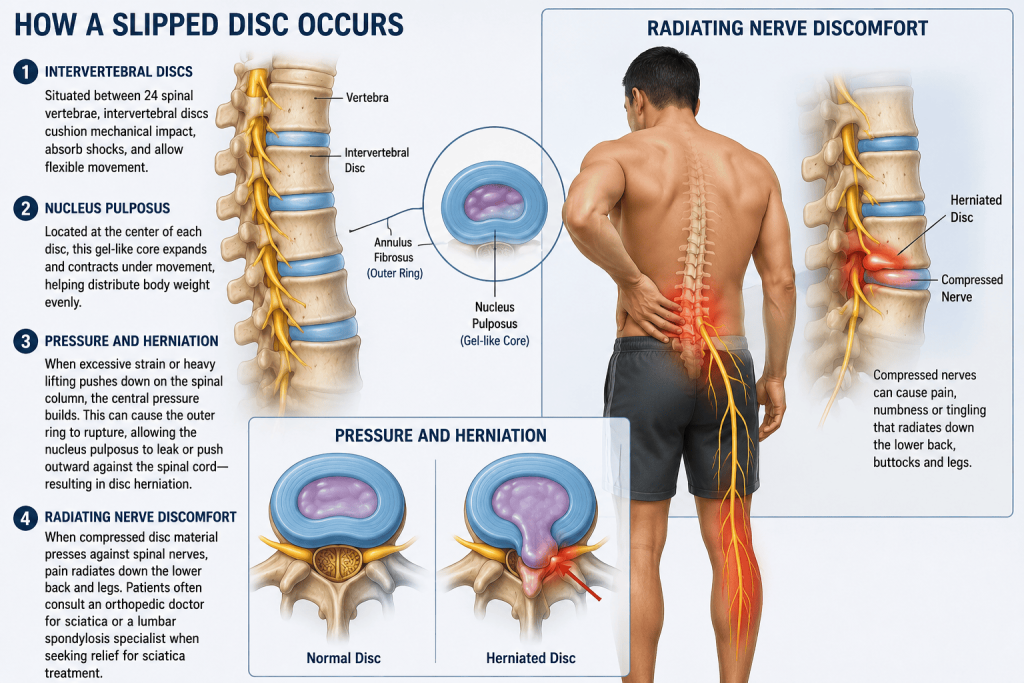
1. Spine Mechanics: How a Slipped Disc Occurs
To understand how a slipped disc develops, Dr. Manish Yadav explains the internal mechanics of the spinal column:
- Intervertebral Discs: Situated between 24 spinal vertebrae, intervertebral discs cushion mechanical impact, absorb shocks, and allow flexible movement.
- Nucleus Pulposus: Located at the center of each disc, this gel-like core expands and contracts under movement, helping distribute body weight evenly.
- Pressure and Herniation: When excessive strain or heavy lifting pushes down on the spinal column, the central pressure builds. This can cause the outer ring to rupture, allowing the nucleus pulposus to leak or push outward against the spinal cord—resulting in disc herniation.
- Radiating Nerve Discomfort: When compressed disc material presses against spinal nerves, pain radiates down the lower back and legs. Patients often consult an orthopedic doctor for sciatica or a lumbar spondylosis specialist when seeking relief for sciatica treatment.
2. Stages of Spinal Conditions
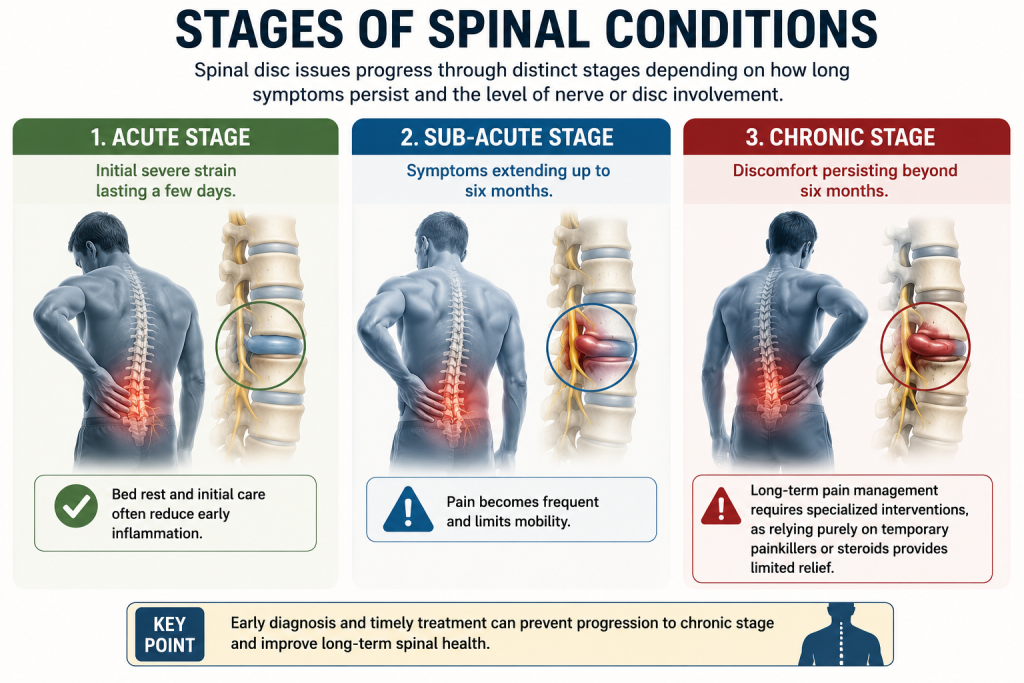
Dr. Manish Yadav emphasizes that spinal disc issues progress through distinct stages depending on how long symptoms persist:
- Acute Stage: Initial severe strain lasting a few days. Bed rest and initial care often reduce early inflammation.
- Sub-Acute Stage: Symptoms extending up to six months, where pain becomes frequent and limits mobility.
- Chronic Stage: Discomfort persisting beyond six months. Long-term pain management requires specialized interventions, as relying purely on temporary painkillers or steroids provides limited relief.
3. Non-Surgical Ayurvedic Decompression Protocol
When conventional painkillers, steroids, or physical therapy fail to yield long-term recovery, patients are frequently advised to consider herniated disc surgery. However, Dr. Manish Yadav outlines an effective non-surgical treatment model utilizing Kati Basti and targeted physical extension postures:
Step 1: Kati Basti Therapy
A specialized herbal oil reservoir is applied over the lumbar spine (Kati Basti). Warm, herb-infused oils deeply penetrate tense spinal muscles and ligaments, soothing inflammation, relaxing muscle spasms, and preparing the spine for manual adjustment.
Step 2: Guided Extension (Bhujangasana / Cobra Pose)
While prone, the patient performs guided cobra pose (Bhujangasana) movements. As the upper body extends, internal intervertebral space expands, generating negative intra-discal pressure.
Step 3: Disc Decompression and Realignment
This negative pressure pulls the herniated gel material away from the compressed spinal cord. By relieving nerve root compression, Kati Basti and manual decompression help stabilize the spinal alignment without surgical intervention.
Comparison of Care Options for Slipped Disc
Slipped Disc Treatment Options
| Treatment Approach | Primary Method | Recovery & Impact | Specialist Role |
|---|---|---|---|
| Conventional Medical Management | Painkillers, Steroids, Rest | Short-term pain masking; may progress to chronic status | General Physician |
| Surgical Management | Discectomy or Spinal Fusion | Invasive procedure; recommended when severe neurological deficits occur | Herniated Disc SurgerySpecialist |
| Non-Surgical Ayurvedic Protocol | Kati Basti, Bhujangasana, Decompression Exercises | Restores intervertebral space, eases pressure, stabilizes spine within 30–40 days | Lumbar Spondylosis Specialist, Orthopedic Doctor for Sciatica |
4. Daily Preventive Care: The Cat-Camel Exercise
To keep the spinal column supple and prevent recurrent disc herniation, Dr. Manish Yadav recommends daily preventative stretching, such as the Cat-Camel pose:
- Position yourself on all fours (hands and knees).
- Gently arch your back upward toward the ceiling, then dip your back downward while lifting your chest.
- Perform this fluid movement 4 to 5 times daily upon waking up to maintain lumbar flexibility and protect intervertebral discs.
Key Takeaway
A slipped disc diagnosis does not automatically require invasive surgery. Early assessment by a lumbar spondylosis specialist or orthopedic doctor for sciatica allows patients to explore effective non-invasive options, including slip disc treatment, slip disc ayurvedic treatment, sciatica treatment, and Herniated Disc Ayurvedic Treatment. By alleviating internal disc pressure through Kati Basti and extension exercises, long-term spinal health can be restored naturally.
Watch the video: