
In the wake of health crises like viral outbreaks, secondary opportunistic infections can pose severe challenges. Among these, black fungal disease—medically termed mucormycosis—gained critical attention. In a detailed video presentation, Dr. Manish Yadav breaks down the environmental origins of the fungus, explains why patients with compromised immunity or diabetes are vulnerable, identifies early warning symptoms, and outlines both diagnostic protocols and supportive management.
1. What is Mucormycosis? Environmental Origins & Transmission
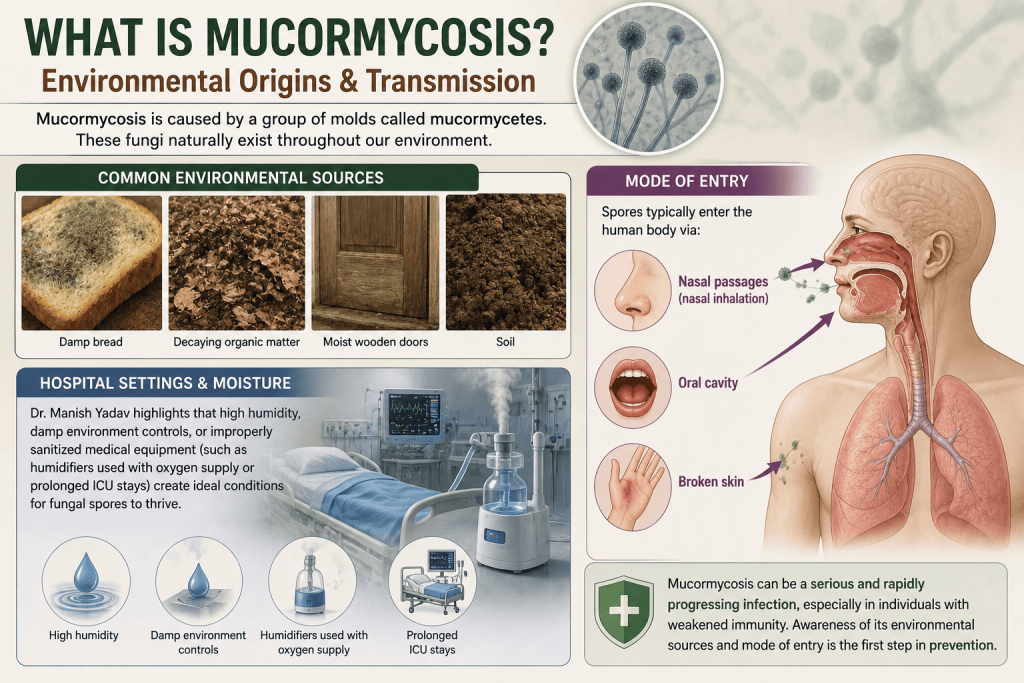
Mucormycosis is caused by a group of molds called mucormycetes. These fungi naturally exist throughout our environment:
- Common Environmental Sources: The mold is commonly found in damp bread, decaying organic matter, moist wooden doors, or soil.
- Hospital Settings & Moisture: Dr. Manish Yadav highlights that high humidity, damp environment controls, or improperly sanitized medical equipment (such as humidifiers used with oxygen supply or prolonged ICU stays) create ideal conditions for fungal spores to thrive.
- Mode of Entry: Spores typically enter the human body via the nasal passages (nasal inhalation), oral cavity, or through broken skin.
2. Who is at High Risk?
A healthy human immune system easily repels daily exposure to environmental fungal spores. However, the infection becomes life-threatening when specific risk factors weaken body defenses:
- Uncontrolled Diabetes: High blood glucose levels severely compromise immune response, making diabetic patients primary targets.
- Immunosuppression & Steroid Use: Long-term administration of high-dose steroids or immunosuppressants lowers immunity.
- Chronic Illnesses: Conditions such as autoimmune disorders, HIV, advanced renal disease, or long ICU hospitalizations create an environment where black fungal disease can colonize tissues rapidly.
3. Recognizing Early Warning Symptoms
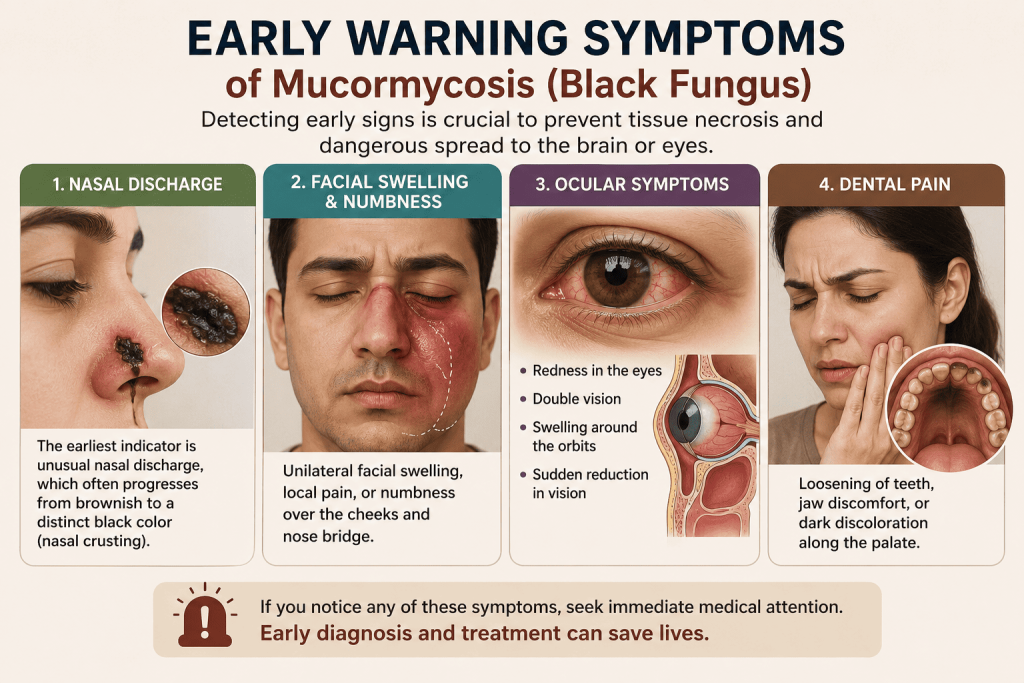
Detecting early signs of mucormycosis is essential to prevent tissue necrosis and dangerous spread to the brain or eyes:
- Nasal Discharge: The earliest indicator is unusual nasal discharge, which often progresses from brownish to a distinct black color (nasal crusting).
- Facial Swelling & Numbness: Unilateral facial swelling, local pain, or numbness over the cheeks and nose bridge.
- Ocular Symptoms: Redness in the eyes, double vision, swelling around the orbits, or sudden reduction in vision.
- Dental Pain: Loosening of teeth, jaw discomfort, or dark discoloration along the palate.
Diagnostic Pathways & Integrated Care Protocols
Mucormycosis Clinical Evaluation & Management
| Evaluation / Stage | Clinical Action | Objective / Medical Purpose | Key Medical Terminology |
|---|---|---|---|
| Initial Clinical Exam | Nasal Endoscopy & Examination | Visually inspects nasal passages for dark necrotic lesions | ENT diagnosis for black fungus |
| Imaging Protocols | Contrast MRI / CT Scan | Determines structural depth, sinus involvement, & orbital spread | MRI for black fungus |
| Tissue Confirmation | Tissue Sampling & Microscopic Analysis | Confirms fungal hyphae presence for targeted mucormycosis treatment | black fungus biopsy |
| Preventative Habits | Blood Sugar Control, Clean Moisture Protocols | Eliminates fungal growth factors to ensure mucormycosis prevention | Preventive Protocol |
| Supportive Therapies | Blood Purification & Raktamokshana | Removes localized metabolic toxins & supports blood circulation | Panchakarma for black fungus |
4. Comprehensive Diagnostic & Treatment Protocols
Proper management requires immediate diagnostic verification followed by intensive medical intervention:
Clinical Diagnostics
- ENT Diagnosis for Black Fungus: An endoscopic examination allows direct visualization of the nasal mucosa to check for characteristic black eschar or tissue death.
- Black Fungus Biopsy: Tissue biopsy remains the definitive test, confirming fungal invasion under microscopic culture.
- MRI for Black Fungus: High-resolution MRI or CT scans help map the exact spread across sinuses, orbits, and cerebral structures.
Medical & Supportive Care
- Conventional Treatment: Standard intervention relies on intravenous antifungal medications (such as Amphotericin B) alongside surgical debridement of necrotic tissue.
- Supportive & Ayurvedic Measures: Dr. Manish Yadav discusses traditional blood-cleansing herbs (such as Anantmool, Chirayta, Manjistha, and Giloy) and specialized therapies like Raktamokshana (bloodletting) under Panchakarma for black fungus principles. These supportive methods aim to eliminate necrotic debris, purify blood circulation, and bolster baseline immunity.
Key Takeaway
Preventing severe outcomes from black fungal disease requires vigilant blood sugar regulation, clean medical environments, and swift action at the first sign of abnormal nasal discharge or facial swelling. Timely clinical confirmation through an ENT diagnosis for black fungus, black fungus biopsy, and MRI for black fungus provides the foundation for effective mucormycosis treatment, robust mucormycosis prevention, and safe supportive approaches like Panchakarma for black fungus.
Watch the video: