

In contemporary society, neurological and mental health challenges have become increasingly prevalent. Often, patients undergo prolonged procedures based on inaccurate diagnoses, leading to years of physical and mental distress. A recent case study shared by Dr. Manish Yadav highlights the importance of precise diagnostic assessment and the profound impact of effective, targeted care strategies.
The Challenge: When Long-term Care Fails
The patient, Ayesha Khatoon, had been seeking medical treatment for two years at various facilities before consulting Dr. Yadav. Her symptoms included persistent dizziness, severe anxiety, excessive lethargy, and erratic behavior. Her physical condition had deteriorated to the extent that she required the constant support of two people simply to move.
A significant obstacle in her journey was the inconsistency between her clinical symptoms and the medical advice received elsewhere. While some previous assessments suggested neurological degeneration, her diagnostic scans consistently appeared normal. Furthermore, the medication administered for assumed depression had inadvertently exacerbated her lethargy and cognitive confusion.
Achieving a Positive Prognosis
Upon examination by Dr. Manish Yadav, a revised approach to her treatment was initiated. Within a period of just one and a half months, a remarkable improvement in her health was observed. The patient, who previously struggled to stand independently, regained the ability to walk unassisted and exhibited significantly improved cognitive clarity and conversational skills.
Key Observations and Professional Insights
Reflecting on this case, several critical takeaways emerge regarding neuro-related care:
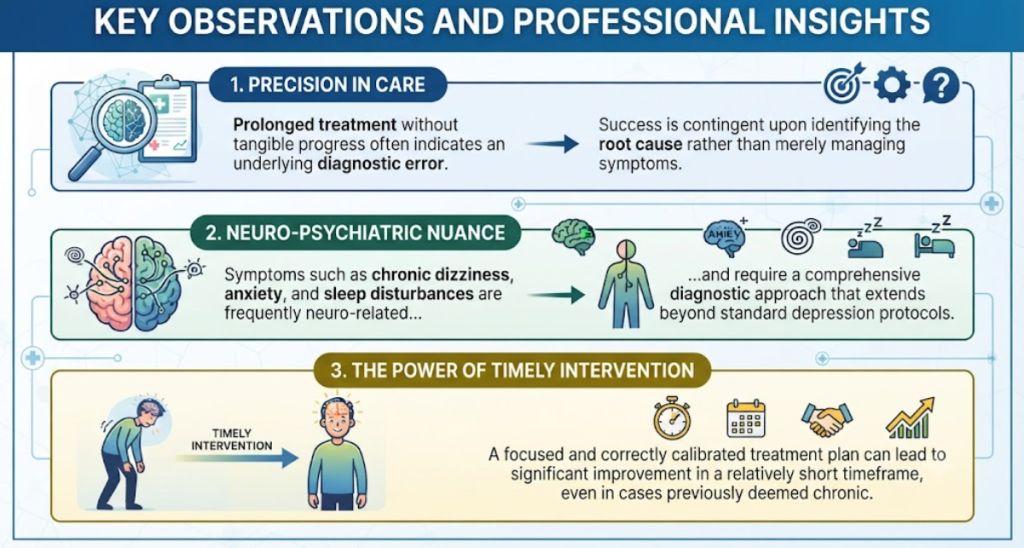
- Precision in Care: Prolonged treatment without tangible progress often indicates an underlying diagnostic error. Success is contingent upon identifying the root cause rather than merely managing symptoms.
- Neuro-Psychiatric Nuance: Symptoms such as chronic dizziness, anxiety, and sleep disturbances are frequently neuro-related and require a comprehensive diagnostic approach that extends beyond standard depression protocols.
- The Power of Timely Intervention: A focused and correctly calibrated treatment plan can lead to significant improvement in a relatively short timeframe, even in cases previously deemed chronic.
Expert Recommendation
Dr. Manish Yadav emphasizes that patients who have been undergoing long-term medication for neuro or mental health conditions without observable improvement should seek a secondary expert evaluation. While virtual consultations are an option, Dr. Yadav advises that an in-person assessment is generally more conducive to accurate diagnosis and effective management.
Watch the Video: