
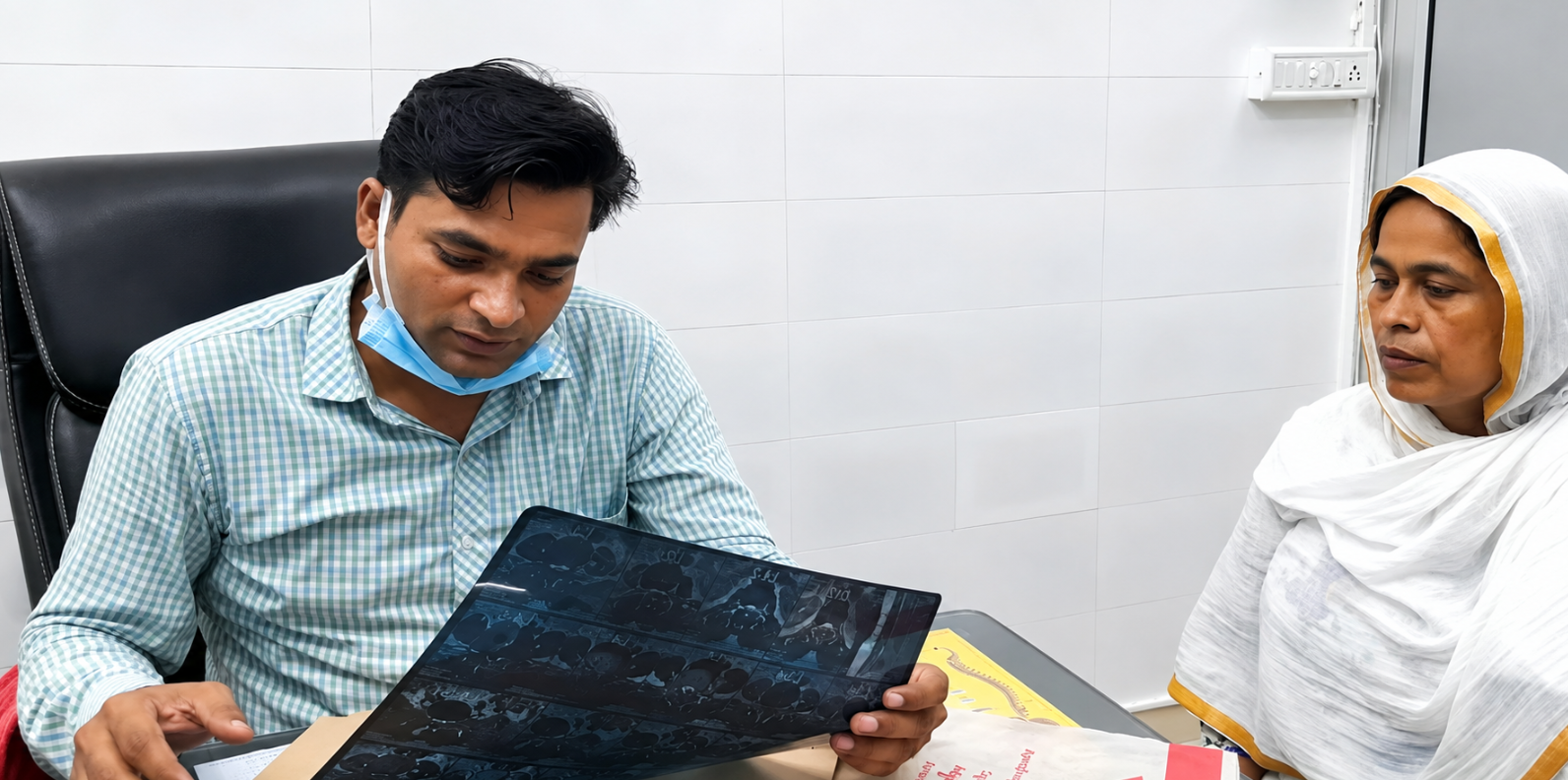
For many patients diagnosed with Grade 2 Anterolisthesis—a condition where a vertebra slips forward over the one below it—surgery is often presented as the inevitable path to relief. However, a recent case highlighted by Dr. Manish Yadav at Rayshree Ayurveda offers a compelling alternative, emphasizing that with patience, discipline, and the right approach, significant recovery is possible without going under the knife.
The Patient’s Story: Before the Recovery
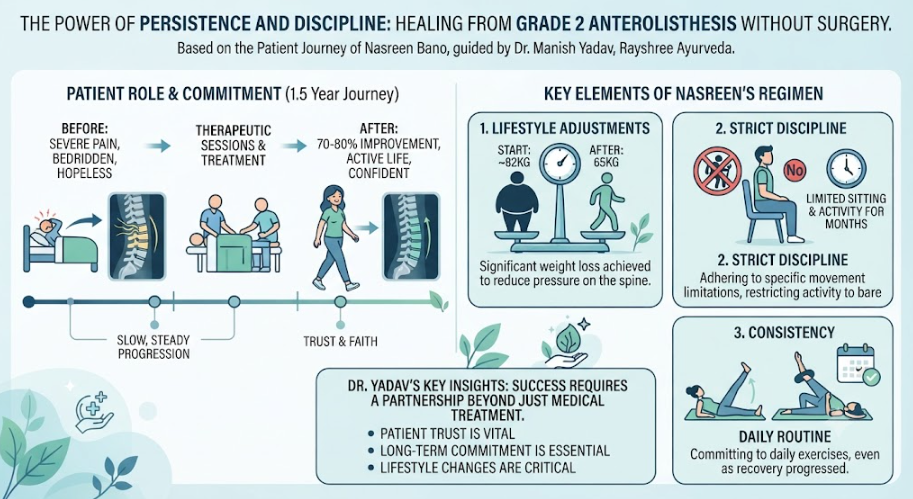
Nasreen Bano, who arrived at the clinic in a state of severe physical distress. Her condition was critical: her reports confirmed a Grade 2 Anterolisthesis, with significant nerve compression between the L4-L5 and L5-S1 vertebrae. The discs were severely compromised, and the bones had shifted from their proper alignment.
Reflecting on her situation prior to treatment, Nasreen shared, “I was in so much pain; I couldn’t lie down or sit. I lost hope in life, thinking I wouldn’t survive this.” Her mobility was so restricted that even basic movements caused extreme agony.
The Power of Persistence and Discipline
Dr. Yadav emphasizes that while medical treatment is crucial, the patient’s role is just as vital. Over a span of roughly a year and a half, Nasreen underwent a series of therapeutic sessions.
The recovery was not an overnight miracle; it was a slow, steady progression. Dr. Yadav highlights that success in such cases relies heavily on the patient’s trust in the treatment process and their commitment to lifestyle changes. Nasreen’s regimen included:
- Lifestyle Adjustments: Significant weight loss, reducing her body weight from around 82kg to 65kg to alleviate pressure on the spine.
- Strict Discipline: Adhering to specific limitations on sitting and activity for several months, often restricting movement to only the bare essentials.
- Consistency: Continuing daily exercises even as she began to feel better.
A Path to Better Quality of Life
After 18 months of dedicated therapy, the results are life-changing. Dr. Yadav notes that her condition has improved from a Grade 2 to a Grade 1 status, with roughly 70–80% improvement in her overall functional health.
When asked if she now feels the need for surgery, Nasreen’s response is clear: she has regained her ability to move, sit, and carry out daily activities, proving that surgery is not always the only answer for severe spinal issues.
A Message to Others
For those currently facing similar diagnoses and contemplating surgery, the takeaway from this journey is one of hope and caution. While not every case can be solved without surgery, it serves as a reminder to explore non-invasive alternatives thoroughly.
As Nasreen advises, when the alternative is being confined to a bed, exploring dedicated, disciplined therapeutic treatment is a path worth considering.
Watch the video: