
It is not uncommon for patients suffering from severe physical pain to receive completely normal radiological or laboratory reports. In many instances, modern diagnostic scans fail to capture the full scope of a patient’s physical suffering, particularly when chronic pain is closely linked with underlying psychological stress, anxiety, or nervous system dysfunction.
In a case review shared by Dr. Manish Yadav from Aaryashree Ayurveda in Kanpur, a 19-year-old student named Anupama Yadav shares her recovery journey following specialized Ayurvedic care and Panchakarma therapies.
Patient Case Background & Diagnostic Puzzle
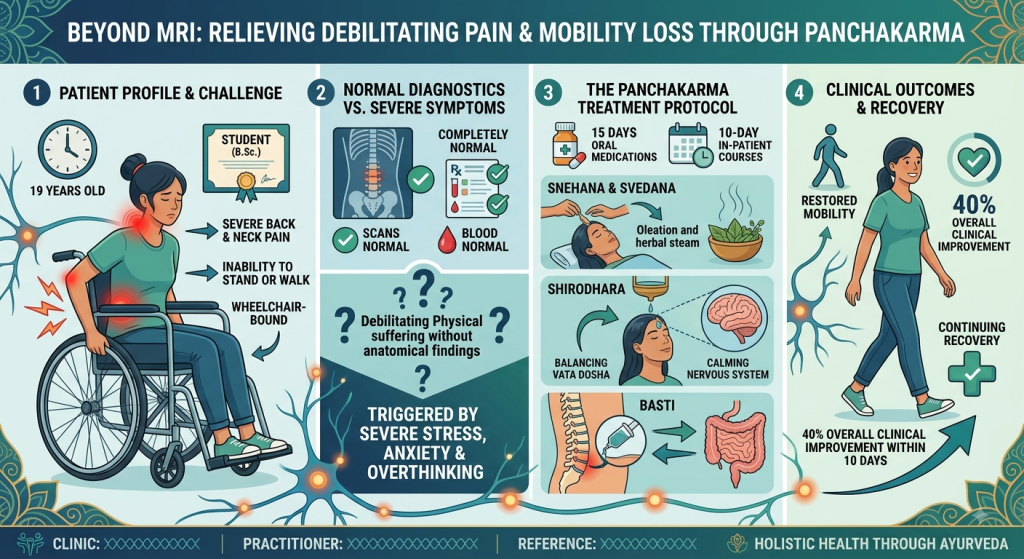
Anupama, a 19-year-old B.Sc. student, presented to the clinic with severe, debilitating back and neck pain that heavily restricted her daily life:
- Debilitating Pain & Loss of Mobility: Upon her initial visit, Anupama was unable to stand for even five minutes, walk independently, or sit comfortably without experiencing intense pain. Her family had to transport her to the clinic using a wheelchair.
- Normal MRI & Blood Diagnostics: Her lumbar and cervical spine MRI reports showed completely normal spinal canal diameters (EP canal diameter). Similarly, complete blood count (CBC) and platelet parameters were normal, with only a very mild elevation in ESR.
- Underlying Root Cause: Dr. Manish Yadav noted that despite normal anatomical reports, the patient was experiencing severe physical symptoms triggered and exacerbated by psychological factors, including high stress, anxiety, and overthinking.
The Ayurvedic Treatment Approach & In-Patient Panchakarma
To address both the somatic pain and the underlying nervous system imbalance, Dr. Manish Yadav initiated a two-phase non-surgical treatment strategy:
- Initial Oral Medications: The patient was first started on targeted Ayurvedic oral formulations for 15 days, which provided enough initial relief for her to start standing up on her own.
- In-Patient Admission & 10-Day Panchakarma Course: To deepen the recovery process, Anupama was admitted for structured in-patient care over a 10-day period.
The Panchakarma protocol focused on calming the nervous system, reducing muscle stiffness, and restoring structural balance through:
- Snehana & Svedana: Therapeutic oleation and herbal steam therapy to relax tight muscular structures and improve tissue circulation.
- Shirodhara: Gentle pouring of medicated liquid over the forehead to relieve anxiety, stress, and mental fatigue.
- Basti (Medicated Enema Therapy): Specialized Panchakarma basti treatments to balance Vata dosha, soothe nerve irritation, and alleviate lower back pain.
Clinical Progress & Recovery Outcomes
- Restored Ability to Stand and Move: Following her initial 15-day oral medication course and subsequent 10-day Panchakarma regimen, Anupama transitioned from being wheelchair-bound to standing and walking independently.
- Significant Pain Reduction: The patient reported a 40% overall clinical improvement within the initial 10 days of in-patient Panchakarma therapy.
- Holistic Recovery Plan: As part of her ongoing care, she will continue with tailored Ayurvedic oral formulations to achieve full recovery.
Key Takeaways
- Scans Don’t Always Tell the Whole Story: Normal MRI and blood reports do not mean pain isn’t real; conditions like stress, anxiety, and Vata imbalance can cause severe physical impairment.
- Mind-Body Connection in Ayurveda: Therapies such as Shirodhara and Basti address both physical pain and psychological stress simultaneously.
- Holistic Rehabilitation: Combining oral medicines with structured in-patient Panchakarma can restore mobility even in acute, non-responsive cases.
Watch the video: