
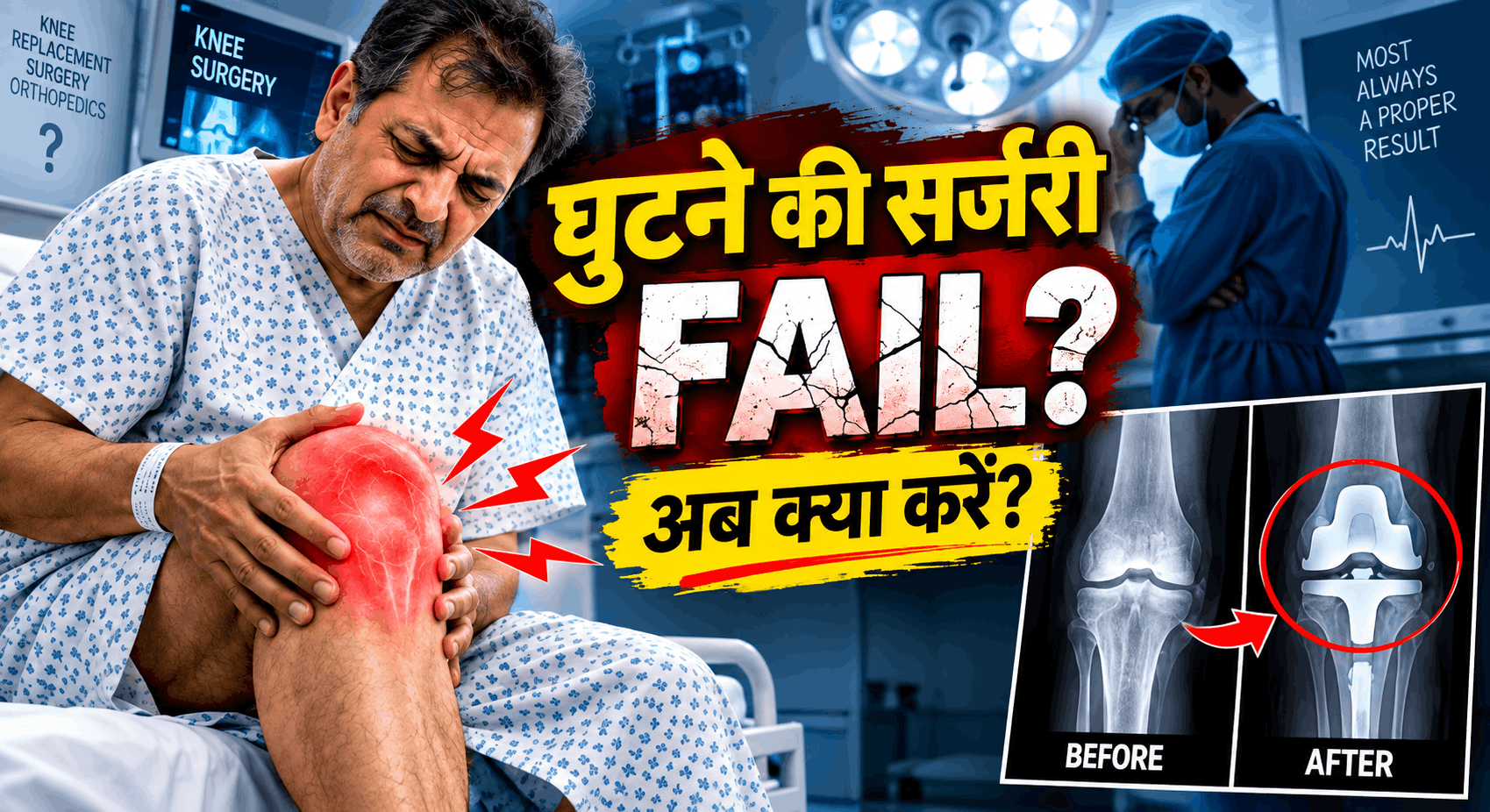
Severe knee pain can make even basic daily activities like walking, standing, or climbing stairs feel overwhelming. Many patients facing severe joint pain or osteoarthritis are told that total knee replacement surgery is their only option. However, according to Dr. Manish Yadav, non-surgical recovery and pain management are often achievable through targeted Ayurvedic therapies, guided lifestyle changes, and conservative care.
In a detailed consultation video, Dr. Manish Yadav breaks down the primary causes of knee joint deterioration and explains how non-invasive methods can help relieve pain, restore mobility, and protect joint structure.
What Causes Knee Joint Degeneration?
In a healthy knee joint, a natural gap lined with cartilage acts as a cushion between the femur (thigh bone) and the tibia (shin bone). When this protective cushion wears away, the joint space narrows, causing the bones to rub against each other. This friction leads to persistent pain, stiffness, a clicking or popping sound, and occasional locking of the joint.
According to Dr. Yadav, several everyday factors contribute to this condition:
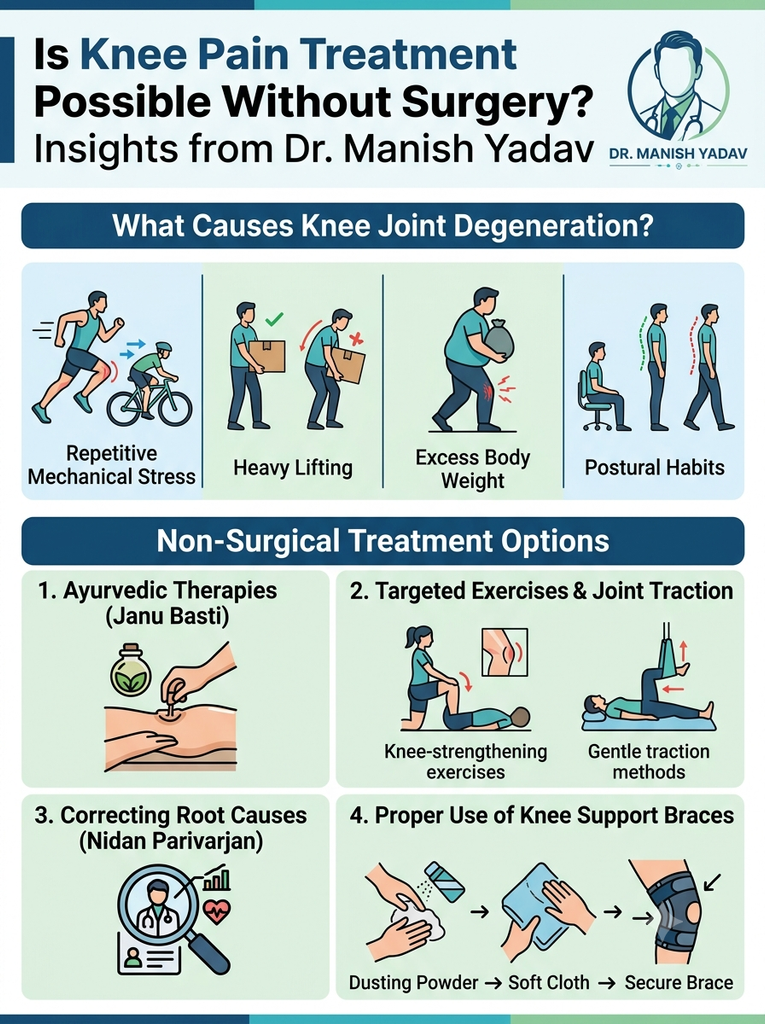
- Repetitive Mechanical Stress: Frequently climbing stairs or repeatedly placing weight on a single leg.
- Heavy Lifting and Overloading: Carrying heavy loads that exceed the joint’s load-bearing capacity.
- Excess Body Weight: Higher body weight places continuous pressure on the knee cartilage.
- Postural Habits (Nidan Parivarjan): Subconscious habits—such as standing unevenly on one leg while cooking or performing chores—can cause uneven wear on one knee compared to the other.
Non-Surgical Treatment Options for Knee Pain
Rather than relying immediately on surgical replacement, Dr. Yadav highlights an integrative Ayurvedic and functional approach designed to manage symptoms and support joint health:
1. Ayurvedic Therapies (Janu Basti)
Dr. Yadav explains that Janu Basti—an Ayurvedic therapy involving pooled warm medicated oils over the knee joint—helps nourish the surrounding tissues, reduce inflammation, and alleviate stiffness. A regular course of treatment over 15 to 20 days, combined with herbal pastes (leaps), can reduce knee pain by 60% to 80% within a month.
2. Targeted Exercises and Joint Traction
Long-term management requires building muscle strength around the knee. Guided knee traction and targeted strengthening exercises—typically recommended over 3 to 6 months—help stabilize the joint, improve alignment, and prevent further cartilage wear.
3. Identifying and Correcting Root Causes (Nidan Parivarjan)
In Ayurvedic medicine, Nidan Parivarjan means identifying and eliminating the root cause of a disease. Patients are encouraged to evaluate their environment for uneven flooring, improper stair usage, or postural strain that puts disproportionate weight on one knee.
4. Proper Use of Knee Support Braces
To protect against joint instability or sudden twisting injuries, Dr. Yadav recommends wearing a supportive knee brace or belt during daily activities.
To avoid skin irritation or chafing, he advises a simple proper-wear protocol:
- Apply dusting powder to the knee area.
- Wrap a soft cloth layer around the joint.
- Fasten the knee brace securely over the cloth.
Can Knee Cartilage or Joint Space Improve Without Surgery?
While immediate surgical consultation often focuses on joint replacement, non-surgical protocols aim to manage symptoms, slow down degeneration, and support potential joint space improvements. Periodic X-rays every few months allow physicians to track joint stability and measure structural progress over time.
Key Takeaways
- Surgery is not always the first or only answer: Non-invasive care can significantly improve joint comfort and function.
- Lifestyle changes matter: Correcting daily posture, weight distribution, and movement habits plays a vital role in recovery.
- Consistency brings results: Combining Ayurvedic therapies like Janu Basti with long-term exercises and proper joint support offers sustainable relief.
Watch the video: