
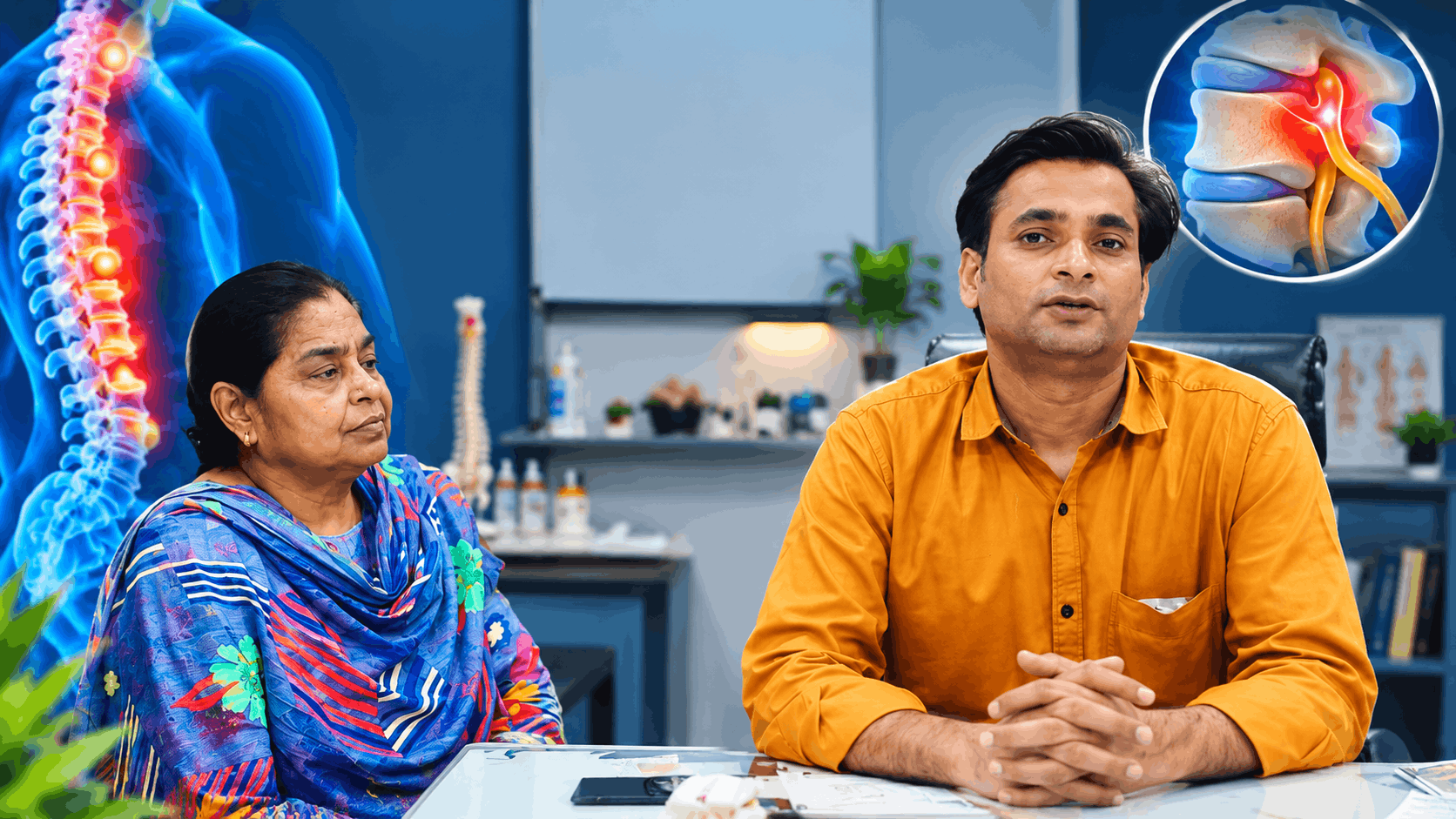
Spinal disorders involving multi-level nerve compression present a complex challenge in modern healthcare. When nerve root impingement occurs across several regions of the spine, conventional surgical intervention often becomes risky or limited in scope. In a patient review shared by Dr. Manish Yadav from Rai Shree Ayurveda (Kanpur), a compelling case study illustrates how targeted Ayurvedic Panchakarma therapy provides relief and restores mobility for patients suffering from severe multi-level spinal disc compression.
Understanding Multi-Level Nerve Compression
Nerve compression occurs when herniated or bulging intervertebral discs bulge out and apply pressure to adjacent spinal nerves. While single-level compression can frequently be targeted surgically, multi-level nerve compression creates significant therapeutic dilemmas.
In the case featured in Dr. Manish Yadav’s patient review, the MRI findings revealed extensive compression across both the lumbar and cervical regions:
- Lumbar Region (Lower Back): Severe compression at L2–L3, L3–L4, L4–L5, and L5–S1.
- Cervical Region (Neck): Compression at C3–C4, C4–C5, and C5–C6.
- Complicating Factors: Accompanying thoracic spinal changes and obesity, which place continuous pressure on the vertebral column.
When multiple nerves are compressed simultaneously, surgeons often advise against extensive surgery. Operating on several spinal levels carries heightened risks, and treating only the single most affected segment may leave residual pain and functional impairment.
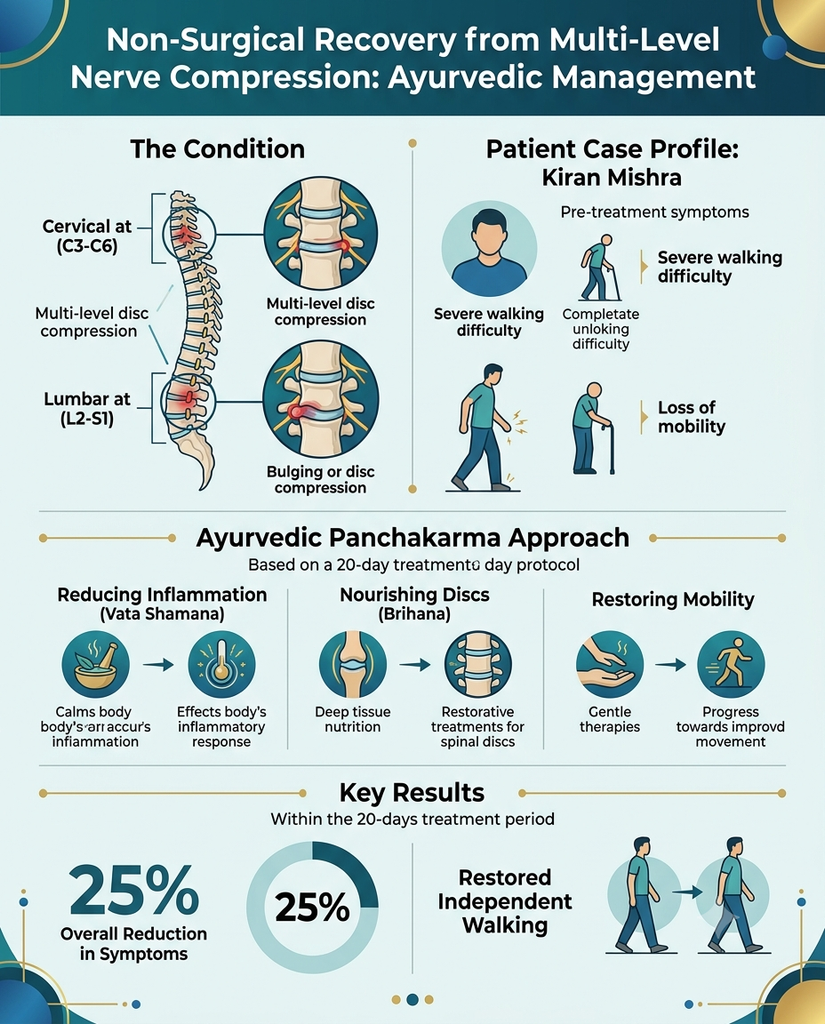
Patient Case Profile: The Journey of Kiran Mishra
The patient, Kiran Mishra, initially sought medical consultation at Rai Shree Ayurveda in July 2021 with lower back pain. Over time, the condition progressively worsened due to delayed intervention, eventually compromising basic functional independence.
Key Pre-Treatment Symptoms
- Severe Walking Difficulty: Inability to stand or walk short distances independently.
- Loss of Basic Mobility: Inability to walk to the washroom or perform daily self-care tasks without support.
- Chronic Pain & Stiffness: Discomfort radiating across both the cervical (neck) and lumbar (lower back) zones.
The Ayurvedic Approach & Panchakarma Management
To address deep-seated nerve compression without invasive surgery, Dr. Manish Yadav initiated a structured 20-day Ayurvedic Panchakarma treatment protocol.
Ayurvedic management for nerve compression focuses on:
- Reducing Inflammation: Soothing irritated nerve roots (Vata Shamana).
- Nourishing Intervertebral Discs: Rehydrating and strengthening spinal tissues (Brihana therapies).
- Restoring Mobility: Relieving muscular spasms and mechanical stiffness in the spine.
Progress and Patient Review After 20 Days
Following 20 days of continuous Ayurvedic therapy, Kiran Mishra reported noticeable functional improvement:
- Restored Basic Mobility: The patient can now wake up during the night and walk short distances independently.
- Improved Daily Living Activities: Difficulty reaching the washroom has substantially diminished.
- Quantifiable Relief: The patient reported approximately a 25% overall reduction in symptoms within the first 20 days of therapy.
Given the chronicity and extent of compression across seven distinct spinal segments, Dr. Yadav emphasized that recovery is a gradual process requiring phased treatment—continuing with an additional 10 days of intensive therapy followed by weekly follow-ups.
Why Choose Ayurvedic Therapy for Complex Spinal Disorders?
- Non-Invasive Alternative: Avoids the surgical risks, long recovery periods, and potential re-operation issues associated with multi-level spinal procedures.
- Holistic Rehabilitation: Focuses not just on symptom suppression, but on enabling patients to regain functional independence (walking, self-care, and basic daily movements).
- Sustainable Management: Panchakarma therapies work systematically to improve spinal flexibility and tissue nourishment over time.
Watch the video: