
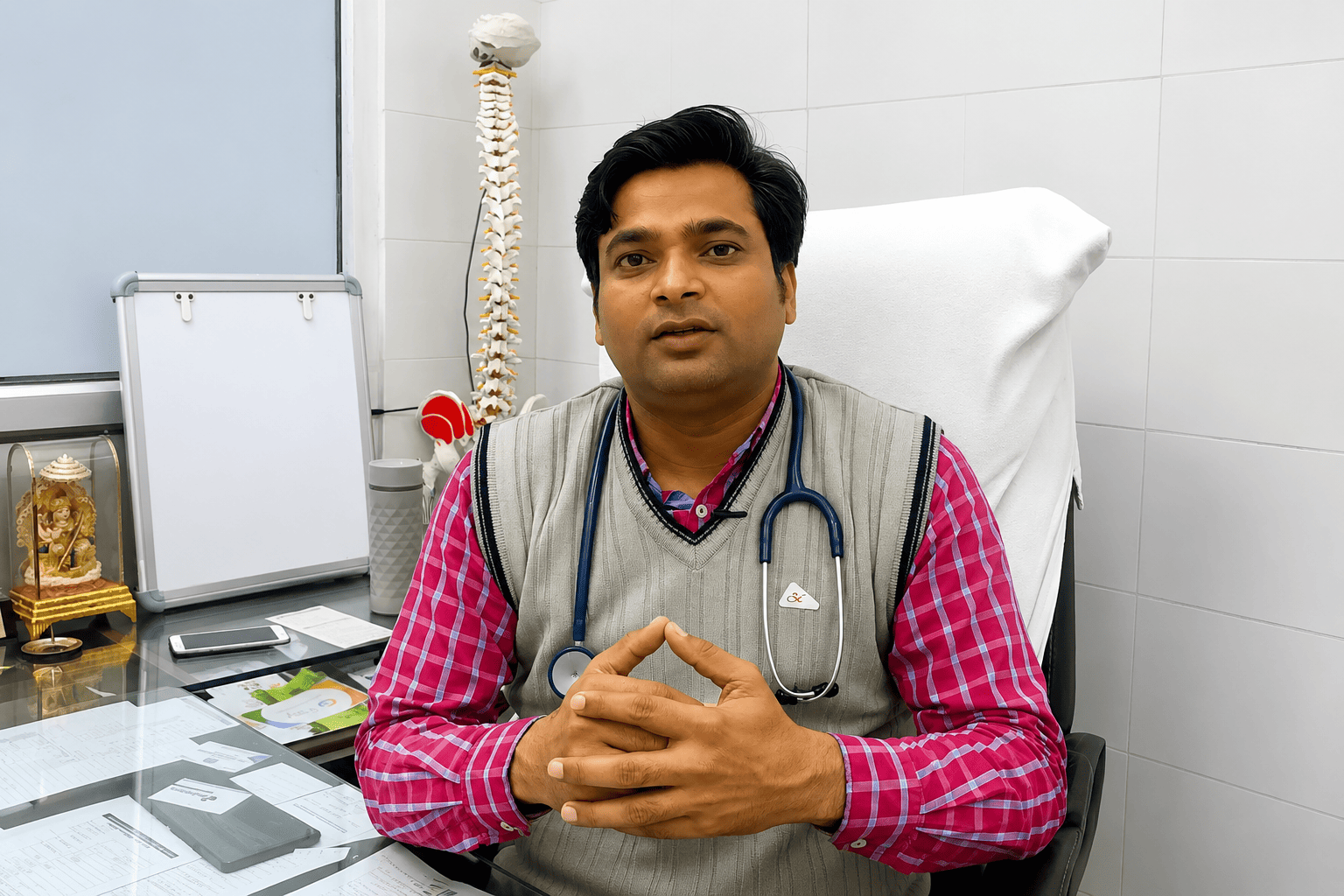
Spinal disorders, nerve blockages, and structural compression across the nerves often manifest as tingling, numbness, or sharp radiating discomfort. In an informative session, Dr. Manish Yadav breaks down why nerve compression happens, the primary clinical symptoms, contributing nutritional deficiencies, essential diagnostic tests, and how non-surgical modalities—including targeted sciatica treatment and traditional panchakarma treatment for paralysis patients—can restore nerve function and mobility.
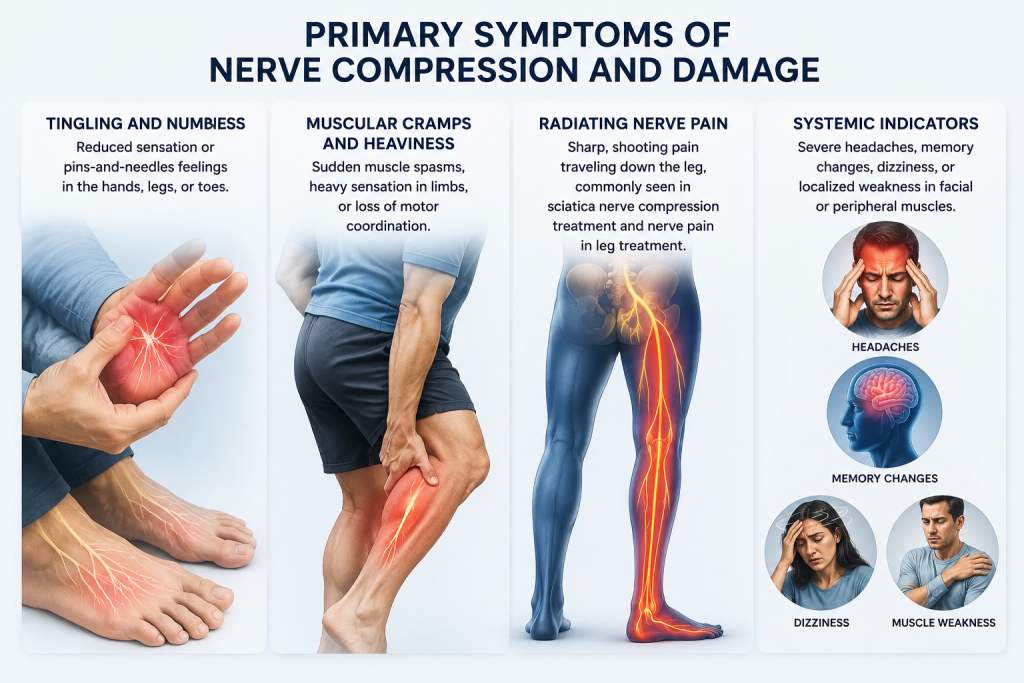
1. Primary Symptoms of Nerve Compression and Damage
When nerves become pinched, inflamed, or compressed due to spinal misalignment or systemic conditions, patients experience a range of physical warning signs:
- Tingling and Numbness: Reduced sensation or pins-and-needles feelings in the hands, legs, or toes.
- Muscular Cramps and Heaviness: Sudden muscle spasms, heavy sensation in limbs, or loss of motor coordination.
- Radiating Nerve Pain: Sharp, shooting pain traveling down the leg, commonly seen in sciatica nerve compression treatment and nerve pain in leg treatment.
- Systemic Indicators: Severe headaches, memory changes, dizziness, or localized weakness in facial or peripheral muscles.
2. Anatomical Insight: The Myelin Sheath Analogy
To clarify how nerve degradation occurs, Dr. Manish Yadav compares human nerves to insulated electrical wires:
- The Outer Insulation (Myelin Sheath): Just like electrical copper wires are protected by an outer plastic coating, nerves are encased in a protective layer known as the myelin sheath.
- Degeneration and Compression: Systemic factors such as long-term high blood sugar, vitamin deficiencies, or mechanical compression wear down this myelin sheath. When insulation erodes, signal transmission slows down, leading to peripheral neuropathy.
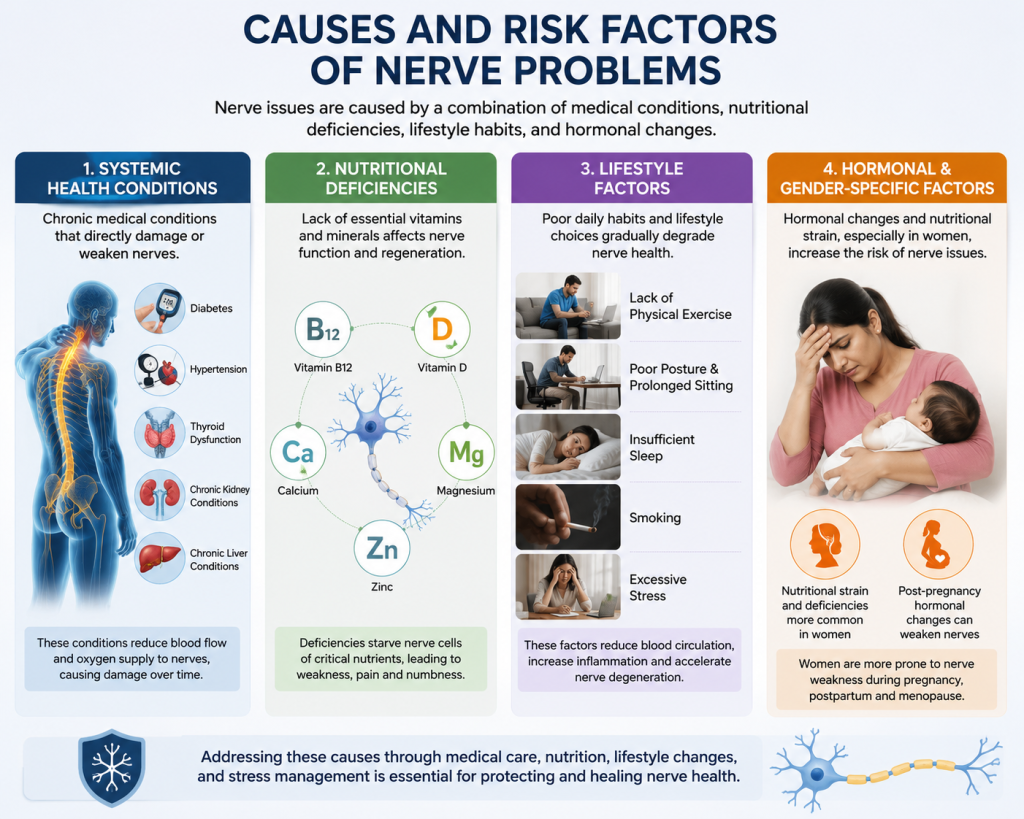
3. Causes and Risk Factors
Nerve issues are not solely caused by mechanical injury; metabolic and lifestyle factors play an equally significant role:
- Systemic Health Conditions: Long-standing diabetes, hypertension, thyroid dysfunction, or chronic kidney/liver conditions directly damage peripheral nerves.
- Nutritional Deficiencies: Lack of Vitamin B12, Vitamin D, Calcium, and essential minerals starves nerve cells of critical nutrients.
- Lifestyle Factors: Lack of physical exercise, poor posture, prolonged sitting, insufficient sleep, smoking, or excessive stress degrade nerve health over time.
- Hormonal & Gender-Specific Factors: Women experiencing nutritional strain or post-pregnancy hormonal changes frequently report higher rates of nerve weakness.
Comprehensive Care Guide for Nerve Health
Diagnostic Tests & Dietary Recommendations
| Category | Diagnostic / Dietary Element | Clinical Purpose |
|---|---|---|
| Essential Diagnostics | Complete Blood Count (CBC) & ESR | Identifies systemic infection, anemia, or internal inflammation |
| Nutritional Biomarkers | Vitamin B12 & Vitamin D3 Panels | Evaluates key vitamins needed to rebuild the myelin sheath |
| Metabolic Screening | HbA1c, LFT (Liver), & KFT (Kidney) | Checks for diabetic nerve strain and systemic organ function |
| Dietary Support (Vitamins & Zinc) | Almonds, peanuts, dairy, whole grains, fish, eggs | Delivers Vitamin E, Zinc, and essential proteins for nerve repair |
| Dietary Support (Calcium & Minerals) | Milk, cottage cheese, leafy greens (spinach, fenugreek, drumstick) | Enhances bone strength, mineral absorption, and muscle tone |
4. Holistic Management and Non-Surgical Therapies
Managing chronic nerve conditions requires a multi-faceted approach rather than relying solely on temporary pain suppressants:
- Targeted Sciatica Treatment: Manual spinal adjustments and targeted therapies relieve pressure off squeezed lumbar nerves, forming a core part of sciatica nerve compression treatment.
- Peripheral Neuropathy Care: Combining peripheral neuropathy best ayurvedic medicine with nutrient-dense diets helps soothe irritated peripheral nerves and alleviate nerve pain in leg treatment.
- Panchakarma for Paralysis: Specialized therapies like panchakarma treatment for paralysis patients help stimulate dormant nerve pathways, improve local blood flow, and rebuild muscular strength.
Key Takeaway
Nerve damage and compression should never be ignored. Early diagnosis through comprehensive blood panels, balanced nutrition rich in Vitamin B12 and minerals, and timely non-surgical care—including specialized sciatica treatment, sciatica nerve compression treatment, peripheral neuropathy best ayurvedic medicine, nerve pain in leg treatment, and panchakarma treatment for paralysis patients—can help restore normal nerve function and overall quality of life.
Watch the video: